
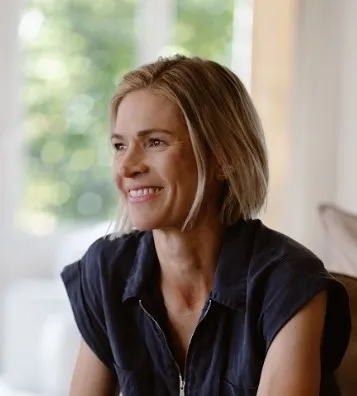
Stephanie Case has built a career operating at the sharp end of global crises, where decisions are made under pressure and the margin for error is small. Over the past two decades, she has worked in senior roles with the United Nations and international aid organizations across Afghanistan, South Sudan,... Read more
Stephanie Case has built a career operating at the sharp end of global crises, where decisions are made under pressure and the margin for error is small. Over the past two decades, she has worked in senior roles with the United Nations and international aid organizations across Afghanistan, South Sudan, Gaza, and the broader Middle East. Her work has included investigating serious human rights violations, negotiating with governments and armed groups to improve civilian protection during conflict, and shaping humanitarian responses to reach the most vulnerable communities.
Alongside her humanitarian career, Stephanie competes professionally in trail and ultrarunning. Since emerging on the international scene in 2008, she has won and placed in some of the world’s most demanding endurance events, including a 450km non-stop, self-navigated race across the Italian Alps. Her experience as an elite athlete informs her work on resilience, pacing, and performance under sustained pressure.
In 2025, Stephanie’s story gained global attention when she won a 100km ultramarathon just six months after giving birth, breastfeeding her daughter at aid stations along the course. The moment sparked widespread discussion about recovery, performance, and the structural barriers facing women in sport and the workplace.
Stephanie is the founder of Free to Run, an award-winning international charity that advances gender equity through running and leadership programs for women and girls in conflict-affected regions. Her work has been recognised with Canada’s Governor General’s Meritorious Service Medal and featured in the acclaimed documentary Free to Run.
She is currently working on her first book, advises organisations on leadership, equality, and impact, and speaks internationally on resilience, navigating uncertainty, and redefining success in complex environments.
Success rarely comes from playing it safe. In environments where progress depends on pushing beyond known limits, failure is often not a mistake but a source of critical information. Using examples from elite ultrarunning, this keynote explores the difference between reckless failure and strategic failure—and why the latter accelerates learning,...
Meaningful change rarely begins with confidence, certainty, or permission. This keynote examines what it takes to take the first step when resources are limited, risks are real, and the path...
When systems collapse and assumptions no longer hold, leadership becomes both simpler and harder. Based on first-hand experience during the fall of Afghanistan, this keynote explores decision-making under extreme pressure, moral responsibility in fast-moving crises, and how leaders act when time and certainty run out. Stephanie examines prioritisation when everything...
Returning to elite sport after becoming a mother—and winning postpartum—required far more than “bouncing back.” This keynote challenges the idea that success means returning to a previous version of ourselves. Stephanie explores how motherhood reshaped her priorities, physiology, and approach to performance, demanding new strategies rather than old benchmarks. The...
In ultrarunning, the plan you start with rarely survives the first half of the race. This keynote explores how high performers respond when conditions change, information is incomplete, and certainty disappears. Stephanie introduces the endurance mindset: the ability to stay composed, reassess in real time, and pivot without panicking. For...
Fear-based thinking often dominates decision-making in uncertain environments. This keynote offers a deliberate counterpoint, exploring what happens when optimism is treated as a strategic choice rather than wishful thinking. Stephanie examines moments where choosing to believe in a positive outcome changed behaviour, risk tolerance, and results—without ignoring reality or downplaying...