Share

Keynote Speaker
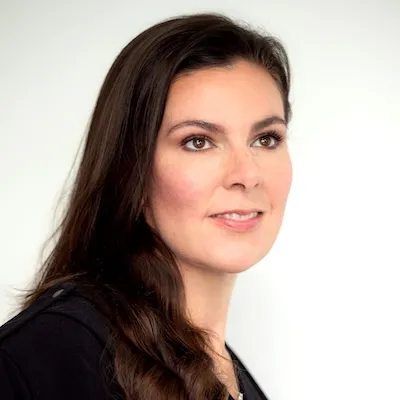
Ziad Obermeyer
Associate Professor, Blue Cross of California Distinguished Professor, Co-Founder and Chief Scientist at Dandelion Health
Popular talks
- Bedside to bench: Reinventing medicine with AI
- (Machine) Learning About Sudden Cardiac Death from ECG Waveforms
- (Machine) Learning from Ground Truth: How to Focus AI on What Matters
- Dissecting algorithmic bias
- +1
Talks
Popular talks by Ziad Obermeyer
-
Bedside to bench: Reinventing medicine with AI
AI is a powerful new tool for making sense of high-dimensional signals (images, waveforms, etc.) that humans struggle to process. In medicine, this is already starting to produce empirical discoveries that can drive theoretical insights. Rebooting this flow of ideas from ‘bedside to bench’—historically a key driver of progress, but…
AI is a powerful new tool for making sense of high-dimensional signals (images, waveforms, etc.) that humans struggle to process. In medicine, this is already starting to produce empirical discoveries that can drive theoretical insights. Rebooting this flow of ideas from ‘bedside to bench’—historically a key driver of progress, but one that has dried up in recent years—will give rise to major innovations in patient care, transform drug discovery, and create enormous economic value. It will also create a new science of medicine, powered by data and computation.
-
(Machine) Learning About Sudden Cardiac Death from ECG Waveforms
Every year, hundreds of thousands suffer sudden cardiac death. What makes these deaths so tragic is that many are preventable, with an implanted cardioverter defibrillator (ICD)—if only we could know who was at high risk before they died. Using a massive new dataset of ECGs linked to death certificates, we…
Every year, hundreds of thousands suffer sudden cardiac death. What makes these deaths so tragic is that many are preventable, with an implanted cardioverter defibrillator (ICD)—if only we could know who was at high risk before they died. Using a massive new dataset of ECGs linked to death certificates, we predict sudden cardiac death far better than current methods, both in a hold-out set of Swedish patients, and in a completely independent dataset from Taiwan. We also show that high-risk patients – and only high-risk patients – who receive ICDs have significantly lower mortality. Finally, we create a generative model of the ECG waveform to tie what the model is ‘seeing’ back to underlying cardiac electrophysiology.
-
(Machine) Learning from Ground Truth: How to Focus AI on What Matters
Despite enormous optimism around AI in health care, it’s easier to find examples of algorithms causing harm than doing good. I’ll argue that the root of these problems is the design principle underlying many of today’s AI tools: automation of (flawed, biased) human decision making. Drawing on my own work,…
Despite enormous optimism around AI in health care, it’s easier to find examples of algorithms causing harm than doing good. I’ll argue that the root of these problems is the design principle underlying many of today’s AI tools: automation of (flawed, biased) human decision making. Drawing on my own work, I’ll show several examples of how we can do better, by retraining AI to learn from patients and their outcomes rather than human judgment. Finding such ground truth outcomes is the key to AI that makes us better, instead of AI that automates our flaws.
-
Dissecting algorithmic bias
Algorithms can reproduce and even scale up racial biases. We demonstrate widespread bias in a widely used family of algorithms in health care, which predict health care costs as a proxy for health needs. Because Black patients face unequal access to care, they cost less than White patients with the…
Algorithms can reproduce and even scale up racial biases. We demonstrate widespread bias in a widely used family of algorithms in health care, which predict health care costs as a proxy for health needs. Because Black patients face unequal access to care, they cost less than White patients with the same needs. Algorithms predict this cost disparity accurately, and thus de-prioritize Black patients relative to their needs. This mechanism of bias—predicting a biased proxy—is widespread in health, as well as criminal justice, finance, and other social sectors where algorithms are applied. Crucially, this ‘label choice bias’ is fixable: retraining algorithms to predict less biased proxies can turn algorithms into a force for good, redistributing resources to those who need them and reducing disparities rather than perpetuating them.
-
Data platforms
Despite great optimism, actual applications of ML to health are in short supply. Using a concrete example, I’ll argue that the bottleneck is not financial or behavioral, but the scarcity of usable clinical data. I’ll also show how two data platforms, that allow safe and ethical access to health data,…
Despite great optimism, actual applications of ML to health are in short supply. Using a concrete example, I’ll argue that the bottleneck is not financial or behavioral, but the scarcity of usable clinical data. I’ll also show how two data platforms, that allow safe and ethical access to health data, can provide a new path forward for training and rigorous evaluation of ML algorithms.
Biography
About Ziad Obermeyer
Ziad Obermeyer works at the intersection of medicine and AI, asking fundamental questions about how data can transform health and health care. He is Associate Professor and Blue Cross of California Distinguished Professor at UC Berkeley, and a founding member of the Berkeley–UCSF joint program in Computational Precision Health.
His work helps doctors make better decisions, and helps researchers make new discoveries by ‘seeing’ the world the way algorithms do. The resulting algorithms are being deployed into real world settings, bridging the gap between computational innovation and patient care. His research on algorithmic bias, which culminated in testimony before Congress, changed how hospitals around the world use AI for population health, and how state attorneys-general hold AI accountable.
Beyond academia, Ziad Obermeyer co-founded Nightingale Open Science, a non-profit that democratizes access to medical imaging data, and Dandelion, a for-profit platform for AI innovation in healthcare. He is a Chan–Zuckerberg Biohub Investigator and a Research Associate at the National Bureau of Economic Research. TIME magazine named him one of the 100 most influential people in AI, and the National Academy of Medicine recognized him as an emerging leader.
He practiced emergency medicine for 10 years, from academic hospitals to rural Arizona, and is now building a new kind of medical practice grounded in massive data collection and rapid experimentation. Before Berkeley, Obermeyer served on the faculty at Harvard Medical School and began his career as a consultant at McKinsey & Company.
How to book Ziad Obermeyer
Answers on fees, availability and booking process.
How do I book Ziad Obermeyer for a keynote speech?
You can book Ziad Obermeyer through London Speaker Bureau by submitting the enquiry form on this page or calling our team. One of our consultants will respond promptly with Ziad's current availability, speaking fees and any specific requirements for your event.
What are Ziad Obermeyer's speaking fees?
Ziad Obermeyer's speaking fees depend on the event format (in-person or virtual), the location, the length of the engagement and the level of customisation required. Please contact London Speaker Bureau for an up-to-date fee quote for Ziad tailored to your event.
What topics does Ziad Obermeyer speak about?
Ziad Obermeyer speaks on Artificial Intelligence, Health. Talks can be shaped around your audience, industry and strategic objectives - share your event brief with London Speaker Bureau and we will work with Ziad to align the content with your delegates and goals.
Is Ziad Obermeyer available for international events?
London Speaker Bureau can book Ziad Obermeyer for events worldwide, subject to Ziad's schedule. Please send us your event date, location and format and we will confirm availability and handle travel and logistics on your behalf.
Does Ziad Obermeyer deliver virtual or online keynotes?
Virtual and hybrid keynotes are now a standard part of the speaking industry. Please contact London Speaker Bureau to confirm whether Ziad Obermeyer is available to deliver a virtual session for your event and on which platform (Zoom, Microsoft Teams, a bespoke studio or your own).
How long is a typical keynote by Ziad Obermeyer?
Most keynote speeches run between 45 and 60 minutes, often followed by a 15-30 minute Q&A. Other formats - shorter conference slots, panel appearances or longer workshop sessions - may also be possible. Share your agenda with London Speaker Bureau and we will confirm what Ziad can accommodate.
Can Ziad Obermeyer tailor the keynote to our industry and audience?
London Speaker Bureau will brief Ziad Obermeyer on your audience profile, sector and objectives so the keynote can be shaped around your event. The level of customisation possible depends on the speaker and the lead time - contact us with your brief and we will confirm what Ziad can offer.
What languages does Ziad Obermeyer present in?
Ziad Obermeyer delivers keynotes in English. This profile may not list every language available; ask London Speaker Bureau to confirm. If you require simultaneous interpretation or a multilingual format, please mention this in your enquiry and London Speaker Bureau will arrange it for you.
What makes Ziad Obermeyer a strong fit as a keynote speaker?
Ziad Obermeyer's areas of expertise include Artificial Intelligence, Health. To get a clear sense of Ziad's style, credentials and how they engage an audience, please review the biography, popular talks and any videos or testimonials shown on this page, or request a detailed speaker brief from London Speaker Bureau.
What kind of events can Ziad Obermeyer speak at?
Ziad Obermeyer can be booked through London Speaker Bureau for corporate conferences, leadership events, internal team meetings, association gatherings and private client engagements where expertise in Artificial Intelligence, Health is relevant. Details of Ziad's background and previous engagements are included in the biography above; contact us if you would like a more detailed list of past clients or case studies.
Does Ziad Obermeyer offer workshops, panels or fireside chats in addition to keynotes?
Beyond keynote speeches, many of the speakers on our roster also take part in workshops, executive masterclasses, panel discussions and fireside chats. Contact London Speaker Bureau with your preferred format and we will confirm what Ziad Obermeyer is able to offer alongside or instead of a keynote.
How far in advance should we book Ziad Obermeyer?
We generally recommend enquiring at least three to twelve months in advance to secure your preferred date with Ziad Obermeyer, particularly during peak conference seasons. Where possible we also accommodate shorter lead times - please contact London Speaker Bureau to check Ziad's current availability for your dates.
Similar Profiles
Speakers you may also like alongside Ziad Obermeyer
-
Nigam Shah Professor of Medicine, and of Biomedical Data Science, Chief Data Scientist at Stanford Healthcare -
Neil Lawrence DeepMind Professor of Machine Learning at the University of Cambridge -
Effy Vayena Professor at ETH Zurich for Big Data and Artificial Intelligence Ethics -
Walter Ricciardi Scientific Adviser to Italy's Minister of Health -
Laura Gilbert Founder of the UK Government's Incubator for AI and one of the UK's leading voices on applied artificial intelligence.