Share
Keynote Speaker
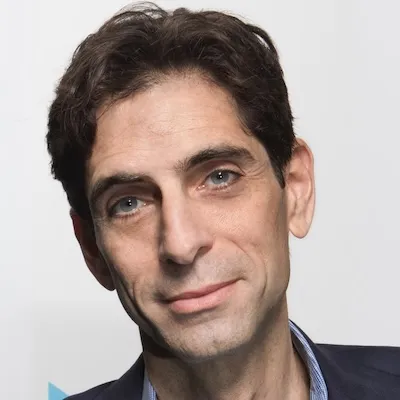
Gianni Giacomelli
Enterprise AI Transformation & Collective Intelligence Expert, MIT Researcher and Former Chief Innovation Officer at Genpact
Popular talks
- Enterprise AI transformation is not a software discipline
- AI augmentation is a management skill, and almost nobody has it
- Beyond “human in the loop”: the loop that degrades on both sides
- Superminds: designing the two networks
- +1
Talks
Popular talks by Gianni Giacomelli
-
Enterprise AI transformation is not a software discipline
AI already writes code, so why hasn’t it transformed knowledge work? Because coding extracts intent that already exists in a few heads, while transforming an organisation means constructing collective intent that exists nowhere yet. About 70% of the work sits outside software and algorithm management, in tacit knowledge — the…
AI already writes code, so why hasn’t it transformed knowledge work? Because coding extracts intent that already exists in a few heads, while transforming an organisation means constructing collective intent that exists nowhere yet. About 70% of the work sits outside software and algorithm management, in tacit knowledge — the largest single stumbling block to transformation. This session walks the shift from code to context: capturing organisational reality from many sources, building a canonical process model with its real constraints, and validating it against operating conditions before anything ships.
Takeaway: why an AI programme stalls in the 70%, and what the missing intelligence layer looks like. (Delivered as the keynote “Tacit Collective Knowledge — the New AI Frontier” at Knowledge Summit Dublin, Trinity College Dublin, June 2026.)
-
AI augmentation is a management skill, and almost nobody has it
Getting people to do things they could not do before is not a technology outcome; it is a design and management one. It means redesigning how work flows, what gets decided where, and how knowledge moves — and most managers have never been asked to do this. The session covers…
Getting people to do things they could not do before is not a technology outcome; it is a design and management one. It means redesigning how work flows, what gets decided where, and how knowledge moves — and most managers have never been asked to do this. The session covers AI’s jagged frontier, where capability meets willingness to expend effort; why augmenting beginners and augmenting experts require opposite approaches; and the scaffolds and exoskeletons that make the difference.
Takeaway: a way to tell whether an AI rollout is building capability or just distributing tools.
-
Beyond “human in the loop”: the loop that degrades on both sides
Saying accountability rests with humans is true but not useful. The better the enablement, the less the human has to think — and the less they learn; judgment fades without practice. Machines, meanwhile, learn from the friction humans generate: corrections, dissent, the case that doesn’t fit. Reviewers who have stopped…
Saying accountability rests with humans is true but not useful. The better the enablement, the less the human has to think — and the less they learn; judgment fades without practice. Machines, meanwhile, learn from the friction humans generate: corrections, dissent, the case that doesn’t fit. Reviewers who have stopped thinking stop producing that signal. Humans learn less, and machines learn from humans who learn less. Strip out the skill and the human becomes a crumple zone, absorbing blame for outcomes they could not have changed.
Takeaway: the enable/teach grid, and where an organisation’s workflows currently sit on it.
-
Superminds: designing the two networks
Intelligence is an emergent property of networks, not of individuals — and there is now a second cognitive network growing inside and around the human one. We are social learners; so, in their way, are the models, built as they are from our civilisation’s linguistic residue. This session maps organisations…
Intelligence is an emergent property of networks, not of individuals — and there is now a second cognitive network growing inside and around the human one. We are social learners; so, in their way, are the models, built as they are from our civilisation’s linguistic residue. This session maps organisations as multi-scale intelligence and gives the four design levers: network structure, goals and incentives, information feeders, and the collaboration environment.
Takeaway: the organisation drawn as a two-network system, and where the wiring is missing. (Delivered as the keynote “AI-Augmented Collective Intelligence: The Intelligence Beyond Intelligence” at the World Beautiful Business Forum, Athens, May 2026.)
-
What happens when transformation gets cheap
Software has collapsed in cost; transformation has not — roughly three units of transformation cost for every unit of software spend. That stack is now itself under attack, with a reasonable chance of partial success within a year or two. The result would be an end-to-end step change in the…
Software has collapsed in cost; transformation has not — roughly three units of transformation cost for every unit of software spend. That stack is now itself under attack, with a reasonable chance of partial success within a year or two. The result would be an end-to-end step change in the cost of innovation, with consequences for competitive position, for the consulting ecosystem that delivers transformation today, and for labour. The session ends on the part leaders skip: protecting the worker rather than the job, and why active labour-market policy — Denmark’s, Austria’s — is the evidence base worth arguing about.
Takeaway: where advantage moves when the transformation stack reprices, and what to do about the people.
Biography
About Gianni Giacomelli
Gianni Giacomelli thinks most organisations are making a category error about artificial intelligence. They treat it as a software programme. What they actually have is a thinking system with two networks inside it — one human, one machine — and they are only upgrading one of them.
His argument is that roughly 70% of enterprise AI transformation sits outside software and algorithm management, in the tacit knowledge that runs operations and lives in the interactions between people rather than in any individual head. AI can already write code, because coding extracts intent that exists in a few heads. Transforming an organisation means constructing collective intent that exists nowhere yet. The two problems differ in kind, not size.
The research base comes from MIT, where he has been Head of Design Innovation and an affiliate researcher at the Collective Intelligence Design Lab since 2018, designing and prototyping “superminds” — digitally augmented collective-intelligence organisations. The operating experience comes from having run the function at scale: he spent thirteen years at Genpact (NYSE: G), latterly as Chief Innovation Officer. There he led Genome, Genpact’s AI-enabled learning platform, which harnesses the collective intelligence of the firm’s own experts to deliver personalised reskilling paths across a 115,000-person workforce. Writing in Harvard Business Review, LinkedIn chief executive Ryan Roslansky held it up as a model for talent management in the age of AI: more than 75,000 people had taken its courses, and company-wide learning had tripled since 2019.
Today he leads Product strategt at kAIgentic, the Singapore-based enterprise AI venture founded by former Microsoft Asia president Ahmed Mazhari and majority-owned by SMBC Group — one of the largest financial-services institutions in the world and among the very largest in Japan. He also advises Goldman Sachs Asset Management’s Value Accelerator on AI, and publishes his research and writing at supermind.design.
Earlier roles include Head of Strategy for SAP’s sustainability portfolio and its outsourcing/on-demand go-to-market. He holds an MSc from the London School of Economics and Political Science.
He delivers in English, Italian and French, and also speaks Spanish and German.
Testimonials
What clients say about Gianni Giacomelli
“Gianni was the kind of speaker you hope for as a curator: a distinguished expert in his field, but one with a view of the whole plane and an astute sense for the audience. A leading voice on collective intelligence with respect for the collective intelligence in the room. He was also warm, generous, and engaging throughout our event, and I can’t recommend him strongly enough.”
“Gianni has presented at several Goldman Sachs events attended by CEOs, CIOs and CTOs, and has consistently earned strong engagement from those audiences. His ability to connect AI developments to strategic business priorities makes him a highly effective communicator for senior executive audiences.”
“Gianni gave an incredible keynote at Knowledge Summit Dublin 2026 — ‘Tacit Collective Knowledge: the New AI Frontier.’ He took a genuinely hard argument, that enterprise AI transformation is mostly not a software problem, and made it land with a room of experienced practitioners rather than talking over them. I would recommend him without hesitation to anyone putting a senior audience in front of the question of what AI is doing to how organisations think.”
How to book Gianni Giacomelli
Answers on fees, availability and booking process.
How do I book Gianni Giacomelli for a keynote speech?
You can book Gianni Giacomelli through London Speaker Bureau by submitting the enquiry form on this page or calling our team. One of our consultants will respond promptly with Gianni's current availability, speaking fees and any specific requirements for your event.
What are Gianni Giacomelli's speaking fees?
Gianni Giacomelli's speaking fees depend on the event format (in-person or virtual), the location, the length of the engagement and the level of customisation required. Please contact London Speaker Bureau for an up-to-date fee quote for Gianni tailored to your event.
What topics does Gianni Giacomelli speak about?
Gianni Giacomelli speaks on Artificial Intelligence, Change, Digital, Future of Work, Leadership. Talks can be shaped around your audience, industry and strategic objectives - share your event brief with London Speaker Bureau and we will work with Gianni to align the content with your delegates and goals.
Is Gianni Giacomelli available for international events?
London Speaker Bureau can book Gianni Giacomelli for events worldwide, subject to Gianni's schedule. Please send us your event date, location and format and we will confirm availability and handle travel and logistics on your behalf.
Does Gianni Giacomelli deliver virtual or online keynotes?
Virtual and hybrid keynotes are now a standard part of the speaking industry. Please contact London Speaker Bureau to confirm whether Gianni Giacomelli is available to deliver a virtual session for your event and on which platform (Zoom, Microsoft Teams, a bespoke studio or your own).
How long is a typical keynote by Gianni Giacomelli?
Most keynote speeches run between 45 and 60 minutes, often followed by a 15-30 minute Q&A. Other formats - shorter conference slots, panel appearances or longer workshop sessions - may also be possible. Share your agenda with London Speaker Bureau and we will confirm what Gianni can accommodate.
Can Gianni Giacomelli tailor the keynote to our industry and audience?
London Speaker Bureau will brief Gianni Giacomelli on your audience profile, sector and objectives so the keynote can be shaped around your event. The level of customisation possible depends on the speaker and the lead time - contact us with your brief and we will confirm what Gianni can offer.
What languages does Gianni Giacomelli present in?
Gianni Giacomelli delivers keynotes in English, French, Italian. This profile may not list every language available; ask London Speaker Bureau to confirm. If you require simultaneous interpretation or a multilingual format, please mention this in your enquiry and London Speaker Bureau will arrange it for you.
What makes Gianni Giacomelli a strong fit as a keynote speaker?
Gianni Giacomelli's areas of expertise include Artificial Intelligence, Change, Digital, Future of Work, Leadership. To get a clear sense of Gianni's style, credentials and how they engage an audience, please review the biography, popular talks and any videos or testimonials shown on this page, or request a detailed speaker brief from London Speaker Bureau.
What kind of events can Gianni Giacomelli speak at?
Gianni Giacomelli can be booked through London Speaker Bureau for corporate conferences, leadership events, internal team meetings, association gatherings and private client engagements where expertise in Artificial Intelligence, Change, Digital, Future of Work, Leadership is relevant. Details of Gianni's background and previous engagements are included in the biography above; contact us if you would like a more detailed list of past clients or case studies.
Does Gianni Giacomelli offer workshops, panels or fireside chats in addition to keynotes?
Beyond keynote speeches, many of the speakers on our roster also take part in workshops, executive masterclasses, panel discussions and fireside chats. Contact London Speaker Bureau with your preferred format and we will confirm what Gianni Giacomelli is able to offer alongside or instead of a keynote.
How far in advance should we book Gianni Giacomelli?
We generally recommend enquiring at least three to twelve months in advance to secure your preferred date with Gianni Giacomelli, particularly during peak conference seasons. Where possible we also accommodate shorter lead times - please contact London Speaker Bureau to check Gianni's current availability for your dates.
Similar Profiles
Speakers you may also like alongside Gianni Giacomelli
-
Thomas Anglero Strategic AI Advisor to Executive Leaders and Boards, Founder, IBM Watson AI Lab for Cancer, Author of Intro to Artificial Intelligence -
Mark Breslin One of the UK's first FTSE100 Chief AI Officers. Practitioner voice on enterprise AI, agentic systems and the Gulf's AI ambition -
Georgia Lewis Anderson Award-winning AI implementation expert and keynote speaker -
Nigel Toon AI Entrepreneur, Investor, and the Author of How AI Thinks -
Katie King UK-born Author and Keynote Speaker specialising in Artificial Intelligence (AI) and business transformation. In 2024, ‘Leading AI Strategist’, one of the ‘Top 10 Influencers in AI’