Share
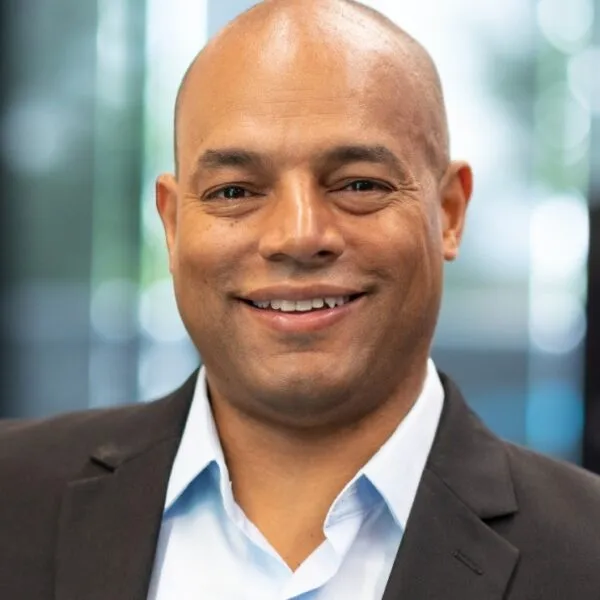
Keynote Speaker
Thomas Anglero
Strategic AI Advisor to Executive Leaders and Boards, Founder, IBM Watson AI Lab for Cancer, Author of Intro to Artificial Intelligence
Popular talks
- The AI Experiment Is Over and the Results Have Not Arrived
- When AI Drains the Incumbent's Moat
- How Do You Make AI Stick and Change How Work Gets Done?
Talks
Popular talks by Thomas Anglero
-
The AI Experiment Is Over and the Results Have Not Arrived
What happens now that the budget has been spent, the returns are being questioned, and someone has to decide what continues and what does not. A keynote for executive teams and leadership conferences. You are being asked what your AI spend has produced, and you do not have a clear…
What happens now that the budget has been spent, the returns are being questioned, and someone has to decide what continues and what does not. A keynote for executive teams and leadership conferences.
You are being asked what your AI spend has produced, and you do not have a clear answer. Neither does anyone else, and nobody wants to be the first to say so.
This is not a failure of your organisation, or of yourself. For two years experimenting was the right thing to do. What has changed is that the permission to keep experimenting is disappearing. Cost and the lack of results decided it. Roughly half of senior leaders scaled back their AI agent deployments this year because what they were spending overran what they were getting back.
There are three major AI decisions in front of you and every one of them has ramifications. Which initiative gets commercialised properly, with a named owner and a line on the P&L. Which initiative gets stopped in public. And what you keep funding without a return, deliberately, with a future date at which that stops being acceptable.
I have been on both sides of this conversation. I approved budgets like these as Nordic CTO at Cognizant and Nordic Director of Innovation at IBM, and I now pay these costs myself in my company with an engineering team of AI agents rather than people.
This talk will leave you able to diagnose your own situation, sort your initiatives, and defend each one to your leader or your board with conviction and data.
-
When AI Drains the Incumbent's Moat
A moat is only a moat from the inside. Your competitor sees a stream. For executive teams and boards, on who wins and who disappears in an AI economy. Your business model, your moat, its advantages are real, and that is the problem. A moat you can see is a…
A moat is only a moat from the inside. Your competitor sees a stream. For executive teams and boards, on who wins and who disappears in an AI economy.
Your business model, your moat, its advantages are real, and that is the problem. A moat you can see is a moat you stop checking. From the other bank it is a stream, and it is drying up. Today, AI is what dries it up faster. It lowers the cost of reproducing what you do, it removes the friction you have been charging for, and it gives a competitor the capability to disrupt what took you years to build.
I have worked inside two incumbent companies that thought their business model was perfect, and it was not. At Ericsson I argued in meetings that when the mobile connection got fast enough, the phone would stop being a phone. The leaders were not hostile to the idea. They simply did not think the mobile software mattered, because we owned the networks, we owned the handsets, and we owned everything in between. At IBM I founded the Watson AI Lab for Cancer at the Oslo Cancer Cluster, one of the first AI cancer laboratories on a European cancer campus. Building it was not the hard part. The hard part was that once it existed, there was nobody inside IBM I could take it to. No single owner of Watson, no one body that could carry it across the company. People who said they were in charge were not. I was told later that separate teams had been funded to compete with each other, and they were told not to share anything with each other.
Neither company was beaten by AI or a better product first. Both stopped being frightened first, and were beaten afterwards. Nobody had to attack. The moat had already dried up.
This is the part you can act on. Your competitor using AI is not the leading indicator. Your leading indicator is your own culture and your own processes, and it is visible long before anything appears on the horizon. Nobody in the leadership team is afraid. Disagreement has become expensive. The question of what would destroy you is no longer asked aloud by anyone holding a budget. Hubris, kingdoms, silos, and a flaw nobody is rewarded for naming.
I will also give you the opposite. A chief executive once asked me at my final interview whether I would go to war against his own organisation and find what was wrong with it. I said I would if he stood beside me. He did, and the work from that period is still running today. The day he left, it was dismantled. That is not a comfortable ending and I will not give you one, because this has to be owned at the top or it does not survive. The same is true of AI.
In AI there is a rule: bad data in, bad results out. An organisation works the same way. What you have built inside is what comes out, and AI is now amplifying it. You leave able to decide what gets fixed inside first, who must say the thing nobody is saying, and who you put in charge of the next round of AI. That is decided in your own building, and it decides everything after it.
-
How Do You Make AI Stick and Change How Work Gets Done?
Managing the change from AI experimentation to real adoption, and reshaping the way work is done across the organisation. A keynote for leadership teams whose first AI attempt did not produce the results they wanted. Your organisation already has AI. What has probably not changed is how the work actually…
Managing the change from AI experimentation to real adoption, and reshaping the way work is done across the organisation. A keynote for leadership teams whose first AI attempt did not produce the results they wanted.
Your organisation already has AI. What has probably not changed is how the work actually gets done. That is the challenge, and everything else is magnified by it.
The technology was always the easy part, and it is the part everyone was excited about. The hard part is asking your colleagues, and yourself, to work differently, when everyone is busy, when the last change programme did not go well, and when nobody can yet say what good looks like. Your people are not resisting AI. Most of them are waiting to be told what to do differently.
I have done this from both sides. I led AI and transformation across the Nordics as CTO at Cognizant and Nordic Director of Innovation at IBM, and I led innovation inside the Norwegian Tax Administration. Today I run a company with an engineering team of AI agents rather than people, so I am not describing this from a distance.
This talk is about where to start when AI has already been implemented. Who has to own it, and why it cannot sit with the technology function alone. What and who to change first, and what to leave alone for now. How to ask more of people who are already tired. And what it costs, honestly.
You leave with a plan of action, the order to do things in, the reasons behind it, and words you can use with your own people on Monday.
Biography
About Thomas Anglero
Thomas Anglero is a Strategic AI Advisor to executive leaders and boards, and the author of Intro to Artificial Intelligence. He advises boards on AI while running a company whose engineering team is AI agents rather than people. That is where his material comes from: what AI actually costs, what breaks, and what it demands of the person responsible for it.
Before founding MerkabaPhi AS in Oslo, he was Nordic Chief Technology and Innovation Officer at Cognizant, where he led AI and enterprise transformation strategy across the Nordic region and closed over USD 500 million in deals. At IBM he was Nordic Director of Innovation and global spokesperson for IBM Watson. He founded the IBM Watson AI Lab for Cancer at the Oslo Cancer Cluster, one of the first AI cancer laboratories on a European cancer campus, and led innovation inside the Norwegian Tax Administration.
He has delivered over 450 keynotes across 30 countries for organisations including IBM, Medtronic, EY, UNICEF, the World Health Organisation, the World Government Summit and the European Commission, and writes the weekly newsletter Clarity at the Top on AI strategy, governance and the decisions leadership teams avoid.
Testimonials
What clients say about Thomas Anglero
"Your presentation was very successful. Everybody was very positive surprised by your presentation…even your colleagues.We have received the first requests from partners how they can book you for their events…so you have made some impression."
"Thomas your presentation at NAET’s annual Meeting in Warsaw 2019 was inspirational and created much discussion amongst normally very silent participants. Your message that technology and technological change is here to help us perform better in our jobs and not a threat is very powerfull. Listening to you was both entertaining and educational. It is good to see that the technique is bringing us forward…"
"Thomas, amazing and inspiring speech today! You are AWESOME!"
"Thomas, Your presentation to the 1300 employees in TechnipFMC was truly inspirational! You made us laugh and you made us reflect on what really matters to us – in a way that will guide us to improve and make a difference. Thank you!"
"Hi Thomas, I heard your great discussion with Richard Quest (CNN) at The Oslo Business Forum a couple of weeks ago and was blown away by your energy!"
"Thomas Anglero is an incredibly passionate, knowledgeable, and visionary person. His ability to communicate relevant examples of innovation that have already occurred makes his audiences open up their minds and reflect on both the present and the future. Highly recommended as a speaker, either in a strategy workshop for a leadership team or in a multi-national customer event."
How to book Thomas Anglero
Answers on fees, availability and booking process.
How do I book Thomas Anglero for a keynote speech?
You can book Thomas Anglero through London Speaker Bureau by submitting the enquiry form on this page or calling our team. One of our consultants will respond promptly with Thomas's current availability, speaking fees and any specific requirements for your event.
What are Thomas Anglero's speaking fees?
Thomas Anglero's speaking fees depend on the event format (in-person or virtual), the location, the length of the engagement and the level of customisation required. Please contact London Speaker Bureau for an up-to-date fee quote for Thomas tailored to your event.
What topics does Thomas Anglero speak about?
Thomas Anglero speaks on Artificial Intelligence, Change, Digital, Leadership, Strategy. Talks can be shaped around your audience, industry and strategic objectives - share your event brief with London Speaker Bureau and we will work with Thomas to align the content with your delegates and goals.
Is Thomas Anglero available for international events?
London Speaker Bureau can book Thomas Anglero for events worldwide, subject to Thomas's schedule. Please send us your event date, location and format and we will confirm availability and handle travel and logistics on your behalf.
Does Thomas Anglero deliver virtual or online keynotes?
Virtual and hybrid keynotes are now a standard part of the speaking industry. Please contact London Speaker Bureau to confirm whether Thomas Anglero is available to deliver a virtual session for your event and on which platform (Zoom, Microsoft Teams, a bespoke studio or your own).
How long is a typical keynote by Thomas Anglero?
Most keynote speeches run between 45 and 60 minutes, often followed by a 15-30 minute Q&A. Other formats - shorter conference slots, panel appearances or longer workshop sessions - may also be possible. Share your agenda with London Speaker Bureau and we will confirm what Thomas can accommodate.
Can Thomas Anglero tailor the keynote to our industry and audience?
London Speaker Bureau will brief Thomas Anglero on your audience profile, sector and objectives so the keynote can be shaped around your event. The level of customisation possible depends on the speaker and the lead time - contact us with your brief and we will confirm what Thomas can offer.
What languages does Thomas Anglero present in?
Thomas Anglero delivers keynotes in English. This profile may not list every language available; ask London Speaker Bureau to confirm. If you require simultaneous interpretation or a multilingual format, please mention this in your enquiry and London Speaker Bureau will arrange it for you.
What makes Thomas Anglero a strong fit as a keynote speaker?
Thomas Anglero's areas of expertise include Artificial Intelligence, Change, Digital, Leadership, Strategy. To get a clear sense of Thomas's style, credentials and how they engage an audience, please review the biography, popular talks and any videos or testimonials shown on this page, or request a detailed speaker brief from London Speaker Bureau.
What kind of events can Thomas Anglero speak at?
Thomas Anglero can be booked through London Speaker Bureau for corporate conferences, leadership events, internal team meetings, association gatherings and private client engagements where expertise in Artificial Intelligence, Change, Digital, Leadership, Strategy is relevant. Details of Thomas's background and previous engagements are included in the biography above; contact us if you would like a more detailed list of past clients or case studies.
Does Thomas Anglero offer workshops, panels or fireside chats in addition to keynotes?
Beyond keynote speeches, many of the speakers on our roster also take part in workshops, executive masterclasses, panel discussions and fireside chats. Contact London Speaker Bureau with your preferred format and we will confirm what Thomas Anglero is able to offer alongside or instead of a keynote.
How far in advance should we book Thomas Anglero?
We generally recommend enquiring at least three to twelve months in advance to secure your preferred date with Thomas Anglero, particularly during peak conference seasons. Where possible we also accommodate shorter lead times - please contact London Speaker Bureau to check Thomas's current availability for your dates.
Similar Profiles
Speakers you may also like alongside Thomas Anglero
-
Ray Eitel-Porter Globally-recognized expert in AI governance, Responsible AI, and AI safety and ethics -
Andreas Welsch Top 10 AI Advisor, Thought Leader, and Former SAP AI Executive -
Laura Gilbert Founder of the UK Government's Incubator for AI and one of the UK's leading voices on applied artificial intelligence. -
Martin Adams Ethical-AI founder and innovation expert helping leaders turn AI hype into real value while keeping a human edge -
Daniel Hulme Rethinking AI and How Agents Impact Business and Humanity