Articles
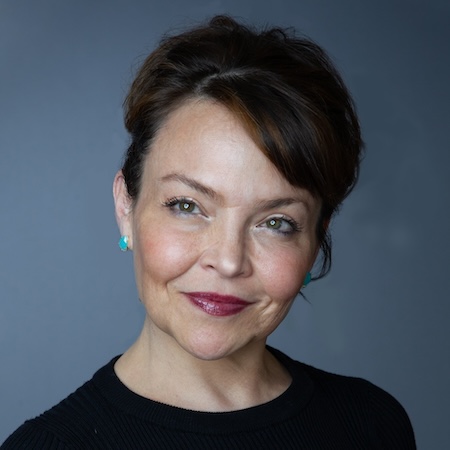
Sophie Hackford at the Condé Nast International Luxury Conference
At the Condé Nast International Luxury Conference in Lisbon this month, futurist…

Keynote Speaker
Global Technology Futurist
Popular talks
Popular talks by Sophie Hackford
A lot of money will be spent on physical intelligence infrastructure in the next decade – upwards of$7 trillion. This has already started re-orienting supply chains and geopolitics, and making a very real imprint on our planet: Meta’s Prometheus data-centre cluster will be almost the size of Manhattan. What are…
A lot of money will be spent on physical intelligence infrastructure in the next decade – upwards of$7 trillion. This has already started re-orienting supply chains and geopolitics, and making a very real imprint on our planet: Meta’s Prometheus data-centre cluster will be almost the size of Manhattan.
What are the consequences will this massive injection of capital and enthusiam, beyond AI? Can we expect cheap, tested compute components to flood the market? And an acceleration of once-unfashionable energy technologies, like fusion or geothermal? The 2nd and 3rd order consequences of this capex explosion will lead to tremendous innovations in unexpected places. Perhaps a return to supersonic flight?
These new compute and energy facilities will be robot-built and robot-maintained. We might finally see gainfully employed robots out in the real world. How shall we design for, and inhabit, these landscape-scale robotics?
If AI to evolve, we don’t just need more data, but a new class of data collected by a new class of sensors – ones co-evolved between compute and biology. If we feed AI with human-centric data – as we do today – it can only access a limited portion…
If AI to evolve, we don’t just need more data, but a new class of data collected by a new class of sensors – ones co-evolved between compute and biology.
If we feed AI with human-centric data – as we do today – it can only access a limited portion of the vast hypersensory space available to many other species: if we can’t follow chemical trails in the oceans like a mysid, or navigate like a bat, perhaps our computers can?
Great strides have been made in the past 2 decades in computer vision – but our sight is tangled up with our cognition. AI might free us from what language does to us – and allow us to see, hear, smell, taste, and sense the world in glorious technicolour.
Sophie will explore how navigation, disease diagnostics, weather forecasting… will be improved by novel sensing technologies.
Computation is not a human construct. After 3bn years of evolution, there are an incredible number of models of computation out there – most of which are new to science, and process information in an entirely different way. Language models are amazing. But if we want to understand our planet,…
Computation is not a human construct. After 3bn years of evolution, there are an incredible number of models of computation out there – most of which are new to science, and process information in an entirely different way.
Language models are amazing. But if we want to understand our planet, what humans say about it is tiny and imperfect. How we compute about our planet is tiny and imperfect.
Experimental drones already run on biological computers built from cultured mouse brain cells. Singapore is building a data-centre with racks of cultured human neurons where you’d expect silicon to be. We might be able to grow leafy supercomputers everywhere. These are not aiming to replace silicon, but be part of the orchestra of available compute.
AI is revealing physics, chemistry, and biology to us in thrilling ways and might enable us to build computers as Feynman predicted. Computers that operate on the same principles as – for example -penicillin operates itself.
The space economy is a puzzle and few can see the full picture. 2026 is seen as an inflection point in the story of the space economy. Space is at the centre of global resilience. The more skyscraper-sized rockets launched into space, the more Earth’s economy relies on orbiting robotic…
The space economy is a puzzle and few can see the full picture. 2026 is seen as an inflection point in the story of the space economy.
Space is at the centre of global resilience. The more skyscraper-sized rockets launched into space, the more Earth’s economy relies on orbiting robotic infrastructure. It is getting very busy up there…
The latest buzz is around million-satellite data centres in space. Space is becoming a computing domain, but also an industrial one. Orbiting autonomous warehousing, zero-G manufacturing, pharmaceutical R&D, and energy generation will accelerate as launch continues to fall in price.
Some see space as a transport logistics layer for Earth – ‘the last 62-mile delivery’ – keeping military essentials like batteries in pods, for delivery anywhere on Earth within an hour. Musk has long promised to transport humans from Sydney to NY outside of the Earth’s atmosphere.
We may have to share strategies with Lunar / Martian architects in designing habitats for extreme environments – housing in Texas with 45 degree summers. Will we need Earthsuits in parts of the world?
The off-world economy may dwarf that of Earth’s in our lifetimes. Sophie will explore the competing interests, from those who see it as a theatre of war, trillion-dollar economy, mysterious scientific frontier, or sci-fi dream.
We do not have mastery of the quantum world yet. But the cutting edge of quantum R&D is full of promise for AI, biotech, compute, security + codebreaking, materials science, sensing, military technologies, and much more. Today compute is (relatively) easy, it’s the framing of the problem that is where…
We do not have mastery of the quantum world yet. But the cutting edge of quantum R&D is full of promise for AI, biotech, compute, security + codebreaking, materials science, sensing, military technologies, and much more.
Today compute is (relatively) easy, it’s the framing of the problem that is where competitive advantage lies. Then it’s just an optimisation problem which classical and quantum are both seeking to solve.
Quantum optimisation R&D has led to a renaissance in classical compute optimisation, but we still act as if we don’t believe in the story of the last half-century of compute. Take-off in compute is always happening (quantum or not), and we have only just begun on this journey.
Sophie will tackle some of these questions:
– What are quantum computers? A little on the science, the weirdness, the promise.
– What other quantum hardware is being developed? (Sensors (for GPS alternatives), satellites, quantum radar, a quantum internet…)
– What to do as a company now?
About Sophie Hackford
As a technologist, Sophie researches novel technologies and their impact on our lives. From quantum computing to robots in orbit, she takes audiences on a rollercoaster ride through the explosive innovations underpinning our future.
Sophie has given more than 300 speeches to boards and exec teams, regularly ranked in the top 3 speakers at conferences. Her familiarity with a wide range of technologies means no two talks are ever the same.
Sophie’s content is tailored for wildly different audiences: from Baidu’s tech conference in Shenzhen, to pension funds in Kuwait, or movie executives on the Warner Brothers Hollywood lot. She’s keynoted events for Adobe, Pepsico, Naspers, Dell, RBS, Google, BMW, Tata and many more, around the world. She has also run innovation workshops, moderated multi-day conferences, and conducted fireside interviews with experts.
Alongside speaking, Sophie is Strategic Advisor to John Deere & Co on the future of food, climate and agriculture – a fascinating convergence of accelerating technologies and existential risks – looking at how to grow more, with less (land, inputs, workers).
Sophie has featured on CNBC’s Squawk Box, across the BBC – including BBC News, World Service, BBC Tech Tent – and has been interviewed and quoted across mainstream media from the Financial Times to Vogue.
She previously co-founded an AI company from Oxford University’s Astrophysics Department, labelling data to train algorithms. She has taught on Singularity University Executive Program’s Space track, and the University of Oxford Physics Department’s entrepreneurship course.
Sophie Hackford previously worked at WIRED Magazine, at Singularity University on the NASA Research Park in Silicon Valley, and the Oxford Martin School at Oxford University, where she raised $120m for frontier-bending research.
Answers on fees, availability and booking process.
You can book Sophie Hackford through London Speaker Bureau by submitting the enquiry form on this page or calling our team. One of our consultants will respond promptly with Sophie's current availability, speaking fees and any specific requirements for your event.
Sophie Hackford's speaking fees depend on the event format (in-person or virtual), the location, the length of the engagement and the level of customisation required. Please contact London Speaker Bureau for an up-to-date fee quote for Sophie tailored to your event.
Sophie Hackford speaks on Artificial Intelligence, Big Data, Blockchain, Digital Trends, Future. Talks can be shaped around your audience, industry and strategic objectives - share your event brief with London Speaker Bureau and we will work with Sophie to align the content with your delegates and goals.
London Speaker Bureau can book Sophie Hackford for events worldwide, subject to Sophie's schedule. Please send us your event date, location and format and we will confirm availability and handle travel and logistics on your behalf.
Virtual and hybrid keynotes are now a standard part of the speaking industry. Please contact London Speaker Bureau to confirm whether Sophie Hackford is available to deliver a virtual session for your event and on which platform (Zoom, Microsoft Teams, a bespoke studio or your own).
Most keynote speeches run between 45 and 60 minutes, often followed by a 15-30 minute Q&A. Other formats - shorter conference slots, panel appearances or longer workshop sessions - may also be possible. Share your agenda with London Speaker Bureau and we will confirm what Sophie can accommodate.
London Speaker Bureau will brief Sophie Hackford on your audience profile, sector and objectives so the keynote can be shaped around your event. The level of customisation possible depends on the speaker and the lead time - contact us with your brief and we will confirm what Sophie can offer.
Sophie Hackford delivers keynotes in English. This profile may not list every language available; ask London Speaker Bureau to confirm. If you require simultaneous interpretation or a multilingual format, please mention this in your enquiry and London Speaker Bureau will arrange it for you.
Sophie Hackford's areas of expertise include Artificial Intelligence, Big Data, Blockchain, Digital Trends, Future. To get a clear sense of Sophie's style, credentials and how they engage an audience, please review the biography, popular talks and any videos or testimonials shown on this page, or request a detailed speaker brief from London Speaker Bureau.
Sophie Hackford can be booked through London Speaker Bureau for corporate conferences, leadership events, internal team meetings, association gatherings and private client engagements where expertise in Artificial Intelligence, Big Data, Blockchain, Digital Trends, Future is relevant. Details of Sophie's background and previous engagements are included in the biography above; contact us if you would like a more detailed list of past clients or case studies.
Beyond keynote speeches, many of the speakers on our roster also take part in workshops, executive masterclasses, panel discussions and fireside chats. Contact London Speaker Bureau with your preferred format and we will confirm what Sophie Hackford is able to offer alongside or instead of a keynote.
We generally recommend enquiring at least three to twelve months in advance to secure your preferred date with Sophie Hackford, particularly during peak conference seasons. Where possible we also accommodate shorter lead times - please contact London Speaker Bureau to check Sophie's current availability for your dates.
Latest posts about Sophie Hackford

Articles
At the Condé Nast International Luxury Conference in Lisbon this month, futurist…
Tops
Blockchain is a new technology that has become a technology buzzword of…
Tops
Workplaces around the world are changing, bringing the future of work as…
Speakers you may also like alongside Sophie Hackford
Enquiry
Share your details and we’ll come back with fees and availability.
One of our consultants will get in touch shortly.