With organisations navigating mounting uncertainty, the world’s most consequential decisions are increasingly shaped by intelligence, and those who understand it best.
London Speaker Bureau represents unrivalled intelligence leaders, including former heads of MI5, MI6, GCHQ and Interpol. These are the individuals who sat at the centre of complex security challenges (from counter-terrorism, cyber warfare to espionage and geopolitical risk).
For organisations seeking a keynote speaker who can offer first-hand insight into today’s threat landscape, our intelligence speakers deliver perspective few others can match.
- MI5 – the UK’s Security Service, globally regarded as one of the world’s foremost authorities on counter-terrorism and counter-espionage.
- MI6 – the UK’s Secret Intelligence Service, operating worldwide to gather intelligence and shape international security and diplomacy.
- GCHQ – the UK’s cyber and signals intelligence agency, a global leader in cyber security and digital threat intelligence.
- Interpol – the world’s largest international police organisation, connecting 190+ countries in the fight against global crime.
Contact us to book one of these sought-after keynote speakers for your next event.
John Sawers led MI6 through a period of international political upheaval and high terrorist threats, including against the 2012 London Olympics.
He also modernised the way the Service works and created a more open approach to public accountability.
Jürgen Stock has served as the Secretary General of Interpol, making him in effect the top police officer in the world.
With 196 member states, he led an international team of 1,200 staff from more than 100 countries. He is one of the most distinguished figures in global policing.
At MI5, Eliza Manningham-Buller led the Service through significant change, expansion, and scrutiny as it dealt with the growth of Al-Qaida terrorism after 9/11, and in response to the 7/7 attacks in London.
Her various roles took her to Washington during the first Gulf war, as well as seeing her responsible for work on Irish terrorism, surveillance, technical collection, finance, and IT.
Robert Hannigan established the UK National Cyber Security Centre in 2016 and was responsible for the UK’s first cyber strategy in 2009.
He was previously the Prime Minister’s Security Adviser at No10 and worked closely with Tony Blair for a decade on the Northern Ireland Peace Process.
As Chief of MI6, Richard Moore refocused the organisation on its core mission of human intelligence during a period marked by renewed great-power competition and rapid technological disruption.
He strengthened collaboration with global intelligence partners and private-sector technology leaders to ensure the Service remained a world-leading intelligence organisation in an increasingly contested environment.
Andrew Parker's time in charge was marked by a focus on operational excellence, developing closer domestic and international partnerships, and modernising MI5’s working methods.
Whilst leading through crises and pressures, he consistently strengthened the Service’s mission-based drive and a determined commitment to practical inclusion.
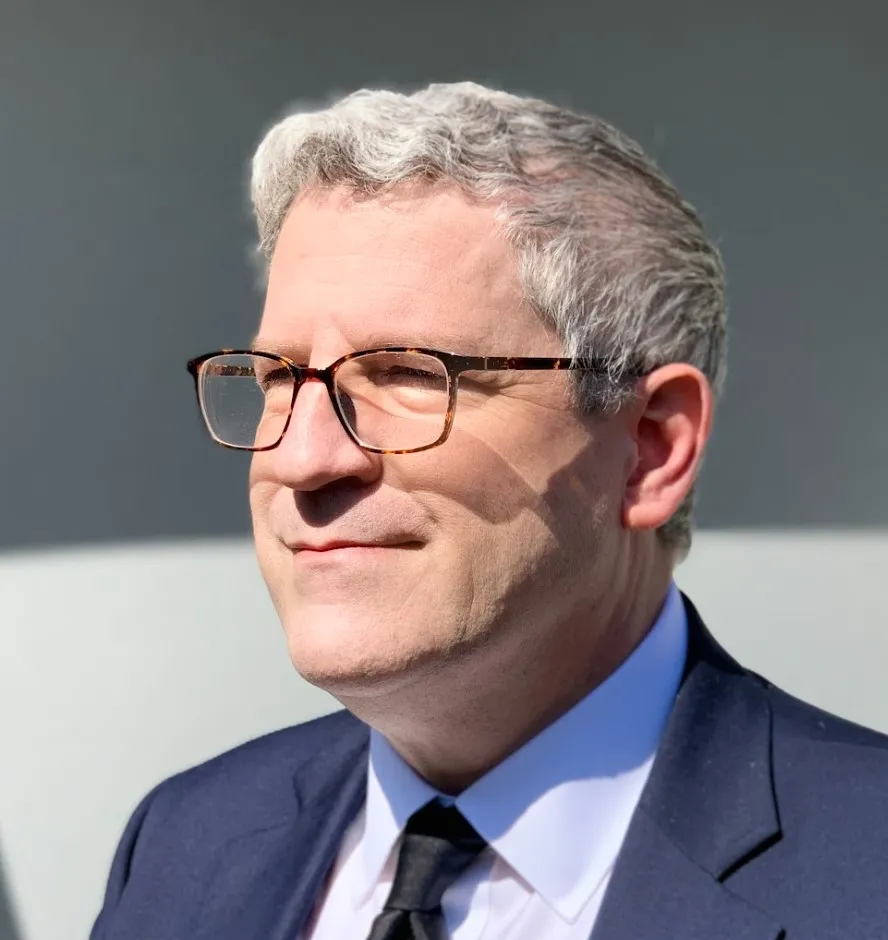
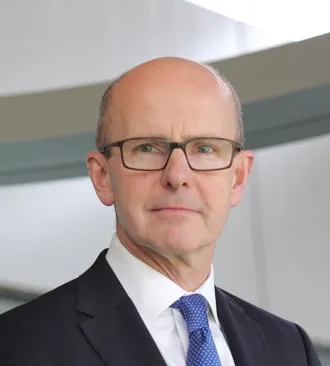
Jeremy Fleming oversaw the development of GCHQ during a period of geopolitical turmoil and technology advancement.
From managing the impact of cyber attacks on the NHS (‘Wannacry’) to Russia’s use of Novichok in Salisbury, and from the UK’s approach to security during the pandemic to support for Ukraine, Jeremy has been at the heart of the UK’s national security for decades.
Jonathan Evans led MI5’s work to ensure the security of the 2012 Olympic and Paralympic Games in London.
He was one of the British government’s principal advisors on national security threats including terrorism, cyber security and espionage and was a member of the Prime Minister’s National Security Council.