
Share
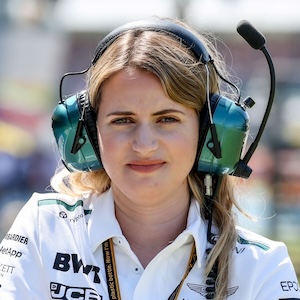
Keynote Speaker
Bernie Collins
Sky Sports F1 Analyst and Former Head of Race Strategy at Aston Martin F1 team
Popular talks
- Technology & Data
- AI & GenAI
- Data-driven performance & Innovation
- Cybersecurity
- +8
Talks
Popular talks by Bernie Collins
-
Technology & Data
More than any other sport, Formula One has embraced a data-driven business culture, particularly with its near obsession with marginal gains and continuous improvement. F1 teams use data to enable drivers, engineers and HQ staff to determine precisely how the car and driver is behaving, diagnose issues, resolve problems and…
More than any other sport, Formula One has embraced a data-driven business culture, particularly with its near obsession with marginal gains and continuous improvement. F1 teams use data to enable drivers, engineers and HQ staff to determine precisely how the car and driver is behaving, diagnose issues, resolve problems and speed up decision making. F1 teams are at the forefront of automotive technology, employing a plethora of data-driven strategies and advanced communication systems to gain a competitive advantage. The use of simulators has transformed driver training, enabling systems to be learned, tested and developed in a virtual environment prior to real-world deployment. And with the advent of additive manufacturing, machine learning, AI and GenAI across F1, the sport’s use of technology to innovate and transform all aspects of its operations is set to accelerate further.
-
AI & GenAI
AI and GenAI is transforming the sport of Formula 1, for example, by enhancing its race-day operations, drastically reducing the time that engineers spend diagnosing and resolving IT issues, enabling faster and more efficient problem-solving across its digital infrastructure. By embedding GenAI in to its race-day operations, F1 is accelerating…
AI and GenAI is transforming the sport of Formula 1, for example, by enhancing its race-day operations, drastically reducing the time that engineers spend diagnosing and resolving IT issues, enabling faster and more efficient problem-solving across its digital infrastructure. By embedding GenAI in to its race-day operations, F1 is accelerating problem resolution and preventing recurring failures through predictive analysis, allowing engineers to focus on innovation. But AI is not only used in race-day operations, it is used across the whole ecosystem for areas such as safety, race strategy and sustainability. This ensures the whole sport maintains peak operational performance for teams, drivers and fans.
-
Data-driven performance & Innovation
More than any other sport, Formula One has embraced a data-driven business culture, particularly with its near obsession with marginal gains and continuous improvement. F1 teams use data to enable drivers, engineers and HQ staff to determine precisely how the car and driver is behaving, diagnose issues, resolve problems and…
More than any other sport, Formula One has embraced a data-driven business culture, particularly with its near obsession with marginal gains and continuous improvement. F1 teams use data to enable drivers, engineers and HQ staff to determine precisely how the car and driver is behaving, diagnose issues, resolve problems and speed up decision making. As information flows seamlessly around the globe, linking car, team and factory, tech security is essential and robust systems ensure protection from multiple threats.
The use of simulators has transformed driver training, enabling systems to be learned, tested and developed in a virtual environment prior to real-world deployment. And with the advent of additive manufacturing, machine learning, AI and GenAI across F1, the sport’s use of technology to innovate and transform all aspects of its operations is set to accelerate further. -
Cybersecurity
More than any other sport, Formula One has embraced a data-driven business culture, particularly with its near obsession with marginal gains and continuous improvement. F1 teams use data to enable drivers, engineers and HQ staff to determine precisely how the car and driver is behaving, diagnose issues, resolve problems and…
More than any other sport, Formula One has embraced a data-driven business culture, particularly with its near obsession with marginal gains and continuous improvement. F1 teams use data to enable drivers, engineers and HQ staff to determine precisely how the car and driver is behaving, diagnose issues, resolve problems and speed up decision making. As information flows seamlessly around the globe, linking car, team and factory, tech security is essential and robust systems ensure protection from multiple threats.
The use of simulators has transformed driver training, enabling systems to be learned, tested and developed in a virtual environment prior to real-world deployment. And with the advent of additive manufacturing, machine learning, AI and GenAI across F1, the sport’s use of technology to innovate and transform all aspects of its operations is set to accelerate further. -
Safety & Risk Management
Safety is a first order priority in Formula One and the last 30 years have seen a profound change to the way in which the sport manages risk. Between 1950 and 1994, there were over 40 driver fatalities at races; there has been one since. This has been made possible…
Safety is a first order priority in Formula One and the last 30 years have seen a profound change to the way in which the sport manages risk. Between 1950 and 1994, there were over 40 driver fatalities at races; there has been one since. This has been made possible by creating clear priorities as regards safety. Compliance is non-negotiable. Safety is not an area of competitive advantage. Safety systems, processes and technologies are shared so that F1 doesn’t have islands of excellence in oceans of mediocrity.
However, the risk averse teams never win in F1 – the teams which embrace and manage risk are more likely to try new things, innovate in ways both small and large, and ultimately drive competitive advantage. It’s the difference between participating and competing. The other factor is ‘fear of failure’. Teams that have a blame culture create such a degree of fear that everyone minimises their contribution and hides their mistakes, whereas those which thrive on creating a learning environment of continuous improvement have a degree of openness, honesty and transparency which promotes creativity and innovation, and taking risks, in a controlled way. -
Health & Safety
Formula One motor racing has placed safety at the centre of its regulatory, technical and operational focus for over 30 years, but it has been the cultural shift among these high performing teams of men and women competing at the forefront of the world championship which has had the greatest…
Formula One motor racing has placed safety at the centre of its regulatory, technical and operational focus for over 30 years, but it has been the cultural shift among these high performing teams of men and women competing at the forefront of the world championship which has had the greatest impact on the sport’s safety revolution.
Given the importance of human factors and behaviours in managing risk, ensuring safety and guaranteeing positive outcomes, F1 has also broadened the scope of its safety programmes to include the health, wellbeing and psychological safety of team members, giving everyone a voice. F1 teams recognise that mental health, physical fitness and overall wellness are key to ensuring the best outcomes are achieved and sustained.
More talks
- Leadership
- Teamwork & Collaboration
- Unlocking Peak Performance & The Winning Mindset
- Change & Transformation
- Sustainability
- Diversity, Equality & Inclusion
Biography
About Bernie Collins
With over a decade’s experience at the forefront of Formula 1, Bernie Collins is an accomplished strategy engineer, most recently employed as Head of Race Strategy for the Aston Martin Formula 1 team. During her career she has held senior strategy and performance engineering roles, playing a central role in the teams she has worked for.
Bernie developed a passion for mechanics at a young age, having grown up constructing and dismantling farm machinery with her father at home in Northern Ireland. She decided to study mechanical engineering at Queen’s University Belfast and joined the annual Formula Student programme, a renowned engineering competition organised by the Institution of Mechanical Engineers.
After graduating in 2009, Bernie secured a place on the McLaren Formula 1 racing team’s graduate trainee programme. She volunteered as an engineer at GP3 Series race weekends, gaining further experience before receiving an offer from the McLaren GT sports car racing team. In 2012, Bernie was promoted to the role of performance engineer and went on to serve as race engineer for the United Autosports GT team in 2013.
Bernie’s big break came in late 2013 when she was offered a temporary role as McLaren’s primary performance engineer in Formula 1. Following this, she was offered the full-time position for the 2014 season, working closely with 2009 Formula 1 World Champion Jenson Button.
In 2015, Bernie started working with the Force India team as a Performance and Strategy Engineer, including supporting team driver Nico Hülkenberg. She helped the team to achieve a podium finish for Sergio Pérez at the 2015 Russian Grand Prix. The following season Force India scored more podiums and consistent, points-scoring results en route to finishing fourth in the 2016 Formula 1 World Championship for Constructors.
Bernie became the Head of Race Strategy for the Aston Martin F1 Team in August 2020. The role saw her leading race strategy, guiding the team and its drivers as they sought to maximise the championship points achieved at each Grand Prix. This included balancing information flow from the drivers, engineers and support team in mission control back at headquarters, as well as reacting to external, dynamic events during each race.
In 2023, Bernie joined the Sky Sports F1 broadcasting team, her race strategy expertise adding significant depth to the channel’s coverage. She also contributes to Formula 1’s official website and digital channels, providing detailed insights on race strategy and helping fans to understand the complexity of decisions made during Grands Prix.
Her first book ‘How to Win a Grand Prix’ was published in 2024, becoming an instant Sunday Times bestseller. Selected as one of the Forbes ‘30 under 30’ young rising stars of manufacturing for the Make It in Great Britain campaign, Bernie has also been named in The Manufacturer’s Top 100 UK Role Models list.
How to book Bernie Collins
Answers on fees, availability and booking process.
How do I book Bernie Collins for a keynote speech?
You can book Bernie Collins through London Speaker Bureau by submitting the enquiry form on this page or calling our team. One of our consultants will respond promptly with Bernie's current availability, speaking fees and any specific requirements for your event.
What are Bernie Collins's speaking fees?
Bernie Collins's speaking fees depend on the event format (in-person or virtual), the location, the length of the engagement and the level of customisation required. Please contact London Speaker Bureau for an up-to-date fee quote for Bernie tailored to your event.
What topics does Bernie Collins speak about?
Bernie Collins speaks on Artificial Intelligence, Change, Communication, Digital, Inspirational Women. Talks can be shaped around your audience, industry and strategic objectives - share your event brief with London Speaker Bureau and we will work with Bernie to align the content with your delegates and goals.
Is Bernie Collins available for international events?
London Speaker Bureau can book Bernie Collins for events worldwide, subject to Bernie's schedule. Please send us your event date, location and format and we will confirm availability and handle travel and logistics on your behalf.
Does Bernie Collins deliver virtual or online keynotes?
Virtual and hybrid keynotes are now a standard part of the speaking industry. Please contact London Speaker Bureau to confirm whether Bernie Collins is available to deliver a virtual session for your event and on which platform (Zoom, Microsoft Teams, a bespoke studio or your own).
How long is a typical keynote by Bernie Collins?
Most keynote speeches run between 45 and 60 minutes, often followed by a 15-30 minute Q&A. Other formats - shorter conference slots, panel appearances or longer workshop sessions - may also be possible. Share your agenda with London Speaker Bureau and we will confirm what Bernie can accommodate.
Can Bernie Collins tailor the keynote to our industry and audience?
London Speaker Bureau will brief Bernie Collins on your audience profile, sector and objectives so the keynote can be shaped around your event. The level of customisation possible depends on the speaker and the lead time - contact us with your brief and we will confirm what Bernie can offer.
What languages does Bernie Collins present in?
Bernie Collins delivers keynotes in English. This profile may not list every language available; ask London Speaker Bureau to confirm. If you require simultaneous interpretation or a multilingual format, please mention this in your enquiry and London Speaker Bureau will arrange it for you.
What makes Bernie Collins a strong fit as a keynote speaker?
Bernie Collins's areas of expertise include Artificial Intelligence, Change, Communication, Digital, Inspirational Women. To get a clear sense of Bernie's style, credentials and how they engage an audience, please review the biography, popular talks and any videos or testimonials shown on this page, or request a detailed speaker brief from London Speaker Bureau.
What kind of events can Bernie Collins speak at?
Bernie Collins can be booked through London Speaker Bureau for corporate conferences, leadership events, internal team meetings, association gatherings and private client engagements where expertise in Artificial Intelligence, Change, Communication, Digital, Inspirational Women is relevant. Details of Bernie's background and previous engagements are included in the biography above; contact us if you would like a more detailed list of past clients or case studies.
Does Bernie Collins offer workshops, panels or fireside chats in addition to keynotes?
Beyond keynote speeches, many of the speakers on our roster also take part in workshops, executive masterclasses, panel discussions and fireside chats. Contact London Speaker Bureau with your preferred format and we will confirm what Bernie Collins is able to offer alongside or instead of a keynote.
How far in advance should we book Bernie Collins?
We generally recommend enquiring at least three to twelve months in advance to secure your preferred date with Bernie Collins, particularly during peak conference seasons. Where possible we also accommodate shorter lead times - please contact London Speaker Bureau to check Bernie's current availability for your dates.
Similar Profiles
Speakers you may also like alongside Bernie Collins
-
Ruth Buscombe Race Strategist in F1, Engineer, Strategist, F1 Analyst & Presenter, FIA Girls on Track Ambassador -
Kate Ancketill Global thought-leader in business futurism, Trend forecaster and board advisor to the world’s biggest brands -
Mark Gallagher Formula 1 Executive, Broadcaster and Author -
Otmar Szafnauer Former Team Principal of Aston Martin -
Neil Martin Formula 1 Strategist - Data Scientist