Share
Keynote Speaker
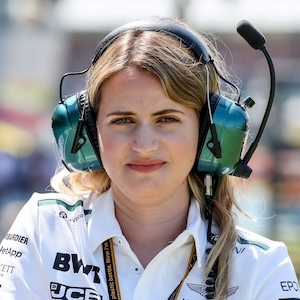
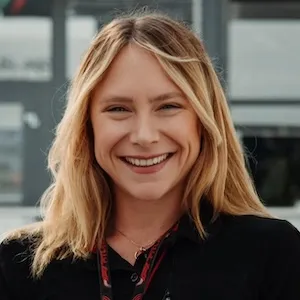
Ruth Buscombe
Race Strategist in F1, Engineer, Strategist, F1 Analyst & Presenter, FIA Girls on Track Ambassador
Popular talks
- Technology & Data
- AI & GenAI
- Cybersecurity
- Data-driven performance & Innovation
- +5
Talks
Popular talks by Ruth Buscombe
-
Technology & Data
More than any other sport, Formula One has embraced a data-driven business culture, particularly with its near obsession with marginal gains and continuous improvement. F1 teams use data to enable drivers, engineers and HQ staff to determine precisely how the car and driver is behaving, diagnose issues, resolve problems and…
More than any other sport, Formula One has embraced a data-driven business culture, particularly with its near obsession with marginal gains and continuous improvement. F1 teams use data to enable drivers, engineers and HQ staff to determine precisely how the car and driver is behaving, diagnose issues, resolve problems and speed up decision making. F1 teams are at the forefront of automotive technology, employing a plethora of data-driven strategies and advanced communication systems to gain a competitive advantage. The use of simulators has transformed driver training, enabling systems to be learned, tested and developed in a virtual environment prior to real-world deployment. And with the advent of additive manufacturing, machine learning, AI and GenAI across F1, the sport’s use of technology to innovate and transform all aspects of its operations is set to accelerate further.
-
AI & GenAI
AI and GenAI is transforming the sport of Formula 1, for example, by enhancing its race-day operations, drastically reducing the time that engineers spend diagnosing and resolving IT issues, enabling faster and more efficient problem-solving across its digital infrastructure. By embedding GenAI in to its race-day operations, F1 is accelerating…
AI and GenAI is transforming the sport of Formula 1, for example, by enhancing its race-day operations, drastically reducing the time that engineers spend diagnosing and resolving IT issues, enabling faster and more efficient problem-solving across its digital infrastructure. By embedding GenAI in to its race-day operations, F1 is accelerating problem resolution and preventing recurring failures through predictive analysis, allowing engineers to focus on innovation. But AI is not only used in race-day operations, it is used across the whole ecosystem for areas such as safety, race strategy and sustainability. This ensures the whole sport maintains peak operational performance for teams, drivers and fans.
-
Cybersecurity
Cybersecurity is huge topic in Formula 1 as there is so much information flowing seamlessly around the globe, linking car, team and factory, so therefore tech security is essential and robust systems ensure protection from multiple threats. Each car is equipped with hundreds of sensors, generating massive amounts of data…
Cybersecurity is huge topic in Formula 1 as there is so much information flowing seamlessly around the globe, linking car, team and factory, so therefore tech security is essential and robust systems ensure protection from multiple threats. Each car is equipped with hundreds of sensors, generating massive amounts of data during races and tests. This data, crucial for real-time decision-making and post-race strategy adjustments, makes teams prime targets for various cyber threats, including espionage, data theft, and sabotage. Therefore cybersecurity measures protect intellectual property, ensure operational continuity, safeguard team communications and maintain compliance and reputation.
-
Data-driven performance & Innovation
More than any other sport, Formula One has embraced a data-driven business culture, particularly with its near obsession with marginal gains and continuous improvement. F1 teams use data to enable drivers, engineers and HQ staff to determine precisely how the car and driver is behaving, diagnose issues, resolve problems and…
More than any other sport, Formula One has embraced a data-driven business culture, particularly with its near obsession with marginal gains and continuous improvement. F1 teams use data to enable drivers, engineers and HQ staff to determine precisely how the car and driver is behaving, diagnose issues, resolve problems and speed up decision making. As information flows seamlessly around the globe, linking car, team and factory, tech security is essential and robust systems ensure protection from multiple threats.
The use of simulators has transformed driver training, enabling systems to be learned, tested and developed in a virtual environment prior to real-world deployment. And with the advent of additive manufacturing, machine learning, AI and GenAI across F1, the sport’s use of technology to innovate and transform all aspects of its operations is set to accelerate further. -
Safety & Risk Management
Safety is a first order priority in Formula One and the last 30 years have seen a profound change to the way in which the sport manages risk. Between 1950 and 1994, there were over 40 driver fatalities at races; there has been one since. This has been made possible…
Safety is a first order priority in Formula One and the last 30 years have seen a profound change to the way in which the sport manages risk. Between 1950 and 1994, there were over 40 driver fatalities at races; there has been one since. This has been made possible by creating clear priorities as regards safety. Compliance is non-negotiable. Safety is not an area of competitive advantage. Safety systems, processes and technologies are shared so that F1 doesn’t have islands of excellence in oceans of mediocrity.
However, the risk averse teams never win in F1 – the teams which embrace and manage risk are more likely to try new things, innovate in ways both small and large, and ultimately drive competitive advantage. It’s the difference between participating and competing. The other factor is ‘fear of failure’. Teams that have a blame culture create such a degree of fear that everyone minimises their contribution and hides their mistakes, whereas those which thrive on creating a learning environment of continuous improvement have a degree of openness, honesty and transparency which promotes creativity and innovation, and taking risks, in a controlled way. -
Health & Safety
Formula One motor racing has placed safety at the centre of its regulatory, technical and operational focus for over 30 years, but it has been the cultural shift among these high performing teams of men and women competing at the forefront of the world championship which has had the greatest…
Formula One motor racing has placed safety at the centre of its regulatory, technical and operational focus for over 30 years, but it has been the cultural shift among these high performing teams of men and women competing at the forefront of the world championship which has had the greatest impact on the sport’s safety revolution.
Given the importance of human factors and behaviours in managing risk, ensuring safety and guaranteeing positive outcomes, F1 has also broadened the scope of its safety programmes to include the health, wellbeing and psychological safety of team members, giving everyone a voice. F1 teams recognise that mental health, physical fitness and overall wellness are key to ensuring the best outcomes are achieved and sustained.
More talks
- Change & Transformation
- Sustainability
- Diversity, Equality and Inclusion
Biography
About Ruth Buscombe
Ruth Buscombe is one of Formula 1’s most highly respected race strategists, now working for the Formula 1 Group following a career spent supporting some of the sport’s best known drivers and teams. Her expertise lies in data analysis and race strategy management, critical capabilities for teams competing in this complex, data-driven sport.
A first-class honours graduate of the University of Cambridge Department of Engineering Ruth began working in Formula 1 with the world famous Scuderia Ferrari at its Maranello headquarters in 2012. This followed the completion of her Masters Thesis with the FIA, the sports governing body, on the Drag Reduction System (DRS). This was later introduced to help improve overtaking opportunities in the sport.
Ruth worked at Ferrari as a Simulations Engineer and later a Race Strategist. Managing strategy from the team’s remote strategy room back at headquarters in Italy, she worked as the car-based strategist for drivers including Formula 1 World Champions Kimi Raikkonen, Fernando Alonso and Sebastian Vettel.
Ruth played a key role in the race winning tactics which secured Sebastian Vettel’s first win with Ferrari in the 2015 Malaysia Grand Prix. Ruth later moved to the American Haas F1 Team in November 2015 as the team’s trackside strategy engineer and kickstarted their journey in F1 with a double points finish in the first two races of the season. She subsequently moved to Sauber, helping the Swiss team to finish ahead of rival Manor Racing in the 2016 Constructors’ Championship.
Ruth spent eight seasons at the famous Hinwil-based squad as Head of Race Strategy between 2016 and 2023. She worked with current Ferrari driver Charles Leclerc during his debut season in Formula 1 in 2018 and helped the team to secure a decade best sixth place in the Formula 1 World Championship for Constructors in 2022 before leaving Sauber at the end of 2023.
Ruth now works as an Analyst, Strategist, Presenter and Commentator for Formula 1 and F1 TV, bringing insight into race-defining strategic decisions to viewers across the world. In this role she also speaks at corporate events within Formula 1, explaining the intricacies of race strategy and data-driven decision making.
As one of Formula 1’s most successful female engineering leaders Ruth is an advocate for women in STEM and Engineering – having been an ambassador for Susie Wolff’s Dare to be Different, now the FIA Girls on Track initiative, since 2016.
How to book Ruth Buscombe
Answers on fees, availability and booking process.
How do I book Ruth Buscombe for a keynote speech?
You can book Ruth Buscombe through London Speaker Bureau by submitting the enquiry form on this page or calling our team. One of our consultants will respond promptly with Ruth's current availability, speaking fees and any specific requirements for your event.
What are Ruth Buscombe's speaking fees?
Ruth Buscombe's speaking fees depend on the event format (in-person or virtual), the location, the length of the engagement and the level of customisation required. Please contact London Speaker Bureau for an up-to-date fee quote for Ruth tailored to your event.
What topics does Ruth Buscombe speak about?
Ruth Buscombe speaks on Digital, Performance, Sports, Strategy, Transformation. Talks can be shaped around your audience, industry and strategic objectives - share your event brief with London Speaker Bureau and we will work with Ruth to align the content with your delegates and goals.
Is Ruth Buscombe available for international events?
London Speaker Bureau can book Ruth Buscombe for events worldwide, subject to Ruth's schedule. Please send us your event date, location and format and we will confirm availability and handle travel and logistics on your behalf.
Does Ruth Buscombe deliver virtual or online keynotes?
Virtual and hybrid keynotes are now a standard part of the speaking industry. Please contact London Speaker Bureau to confirm whether Ruth Buscombe is available to deliver a virtual session for your event and on which platform (Zoom, Microsoft Teams, a bespoke studio or your own).
How long is a typical keynote by Ruth Buscombe?
Most keynote speeches run between 45 and 60 minutes, often followed by a 15-30 minute Q&A. Other formats - shorter conference slots, panel appearances or longer workshop sessions - may also be possible. Share your agenda with London Speaker Bureau and we will confirm what Ruth can accommodate.
Can Ruth Buscombe tailor the keynote to our industry and audience?
London Speaker Bureau will brief Ruth Buscombe on your audience profile, sector and objectives so the keynote can be shaped around your event. The level of customisation possible depends on the speaker and the lead time - contact us with your brief and we will confirm what Ruth can offer.
What languages does Ruth Buscombe present in?
Ruth Buscombe delivers keynotes in English. This profile may not list every language available; ask London Speaker Bureau to confirm. If you require simultaneous interpretation or a multilingual format, please mention this in your enquiry and London Speaker Bureau will arrange it for you.
What makes Ruth Buscombe a strong fit as a keynote speaker?
Ruth Buscombe's areas of expertise include Digital, Performance, Sports, Strategy, Transformation. To get a clear sense of Ruth's style, credentials and how they engage an audience, please review the biography, popular talks and any videos or testimonials shown on this page, or request a detailed speaker brief from London Speaker Bureau.
What kind of events can Ruth Buscombe speak at?
Ruth Buscombe can be booked through London Speaker Bureau for corporate conferences, leadership events, internal team meetings, association gatherings and private client engagements where expertise in Digital, Performance, Sports, Strategy, Transformation is relevant. Details of Ruth's background and previous engagements are included in the biography above; contact us if you would like a more detailed list of past clients or case studies.
Does Ruth Buscombe offer workshops, panels or fireside chats in addition to keynotes?
Beyond keynote speeches, many of the speakers on our roster also take part in workshops, executive masterclasses, panel discussions and fireside chats. Contact London Speaker Bureau with your preferred format and we will confirm what Ruth Buscombe is able to offer alongside or instead of a keynote.
How far in advance should we book Ruth Buscombe?
We generally recommend enquiring at least three to twelve months in advance to secure your preferred date with Ruth Buscombe, particularly during peak conference seasons. Where possible we also accommodate shorter lead times - please contact London Speaker Bureau to check Ruth's current availability for your dates.
Similar Profiles
Speakers you may also like alongside Ruth Buscombe
-
Bernie Collins Sky Sports F1 Analyst and Former Head of Race Strategy at Aston Martin F1 team -
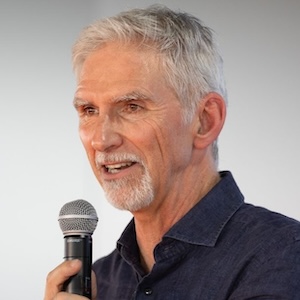
Damon Hill British Former Formula 1 World Champion, F1 Legend, son of F1 champion Graham Hill -
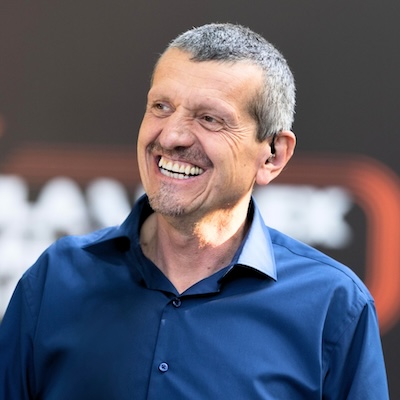
Guenther Steiner Team principal of Haas F1 Team in the FIA Formula One World Championship -
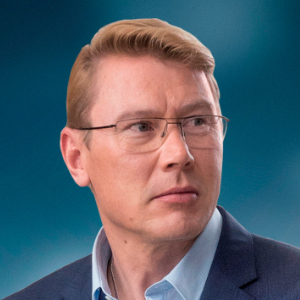
Mika Hakkinen The Flying Finn, Two-times Formula 1 Champion -
Mark Gallagher Formula 1 Executive, Broadcaster and Author