
Share
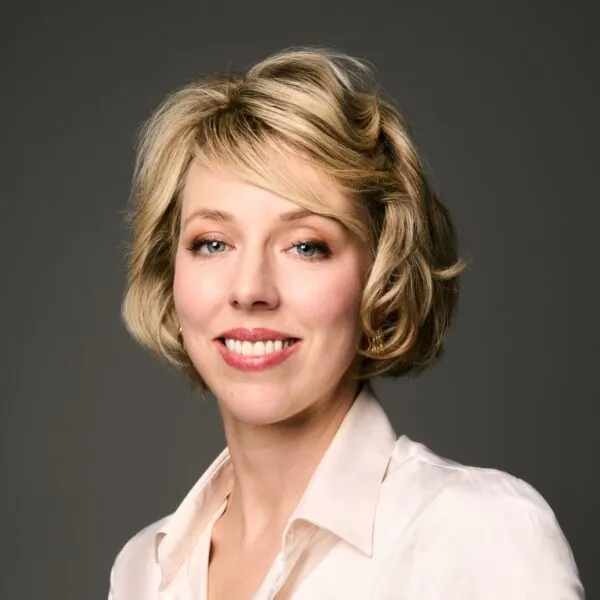
Keynote Speaker
Katrine Kielos
Economics columnist, financial journalist and broadcaster
Popular talks
- The Price of Everything: The Global Economic Outlook
- The Price of Money: Interest Rates, Debt and the New Limits of Politics
- The Price of Peace: Trade, Tariffs and the New Global Order
- The Price of Intelligence: What AI Really Means for the Economy
- +2
Talks
Popular talks by Katrine Kielos
-
The Price of Everything: The Global Economic Outlook
For decades, the world economy behaved like Oscar Wilde’s cynic, who knew the price of everything and the value of nothing. Money and peace were priced as if they were almost free. Now those prices are being reset, while the price of intelligence may be heading towards zero. What is…
For decades, the world economy behaved like Oscar Wilde’s cynic, who knew the price of everything and the value of nothing. Money and peace were priced as if they were almost free. Now those prices are being reset, while the price of intelligence may be heading towards zero. What is really driving growth, inflation and markets in the year ahead, and why are the familiar models struggling to explain it?
-
The Price of Money: Interest Rates, Debt and the New Limits of Politics
An interest rate is the price of time: what it costs to bring the future into the present. For more than a decade, that price was close to zero, and companies, governments and households built their plans around it. Now time has a price again. What does this mean for…
An interest rate is the price of time: what it costs to bring the future into the present. For more than a decade, that price was close to zero, and companies, governments and households built their plans around it. Now time has a price again. What does this mean for investment, company strategy, debt and growth? Once again, the bond market is setting the limits of what governments can do. As James Carville put it in 1993, if he were reincarnated, he’d want to come back as the bond market: you can intimidate everybody.
-
The Price of Peace: Trade, Tariffs and the New Global Order
For thirty years, we told ourselves a comforting story: open economies would bring peace. In our economic thinking, peace was a by-product of open markets, with a price close to zero. Nowhere was this truer than in Europe, which could rely on cheap energy, a US security guarantee and a…
For thirty years, we told ourselves a comforting story: open economies would bring peace. In our economic thinking, peace was a by-product of open markets, with a price close to zero. Nowhere was this truer than in Europe, which could rely on cheap energy, a US security guarantee and a belief that trade would change its authoritarian neighbours. That price is now rising: in rearmament, resilient supply chains, tariffs and industrial policy, and in the changing economic relationship between the US, China and Europe. What does this mean for growth, inflation, public finances and company strategy?
-
The Price of Intelligence: What AI Really Means for the Economy
The price of intelligence is falling fast. But every technological revolution has been sold as a productivity miracle, and the reality is always messier. Jevons’ paradox: when steam engines became more efficient, Britain used more coal, not less. When light became cheap, we lit the rooms we never lit. Cheaper…
The price of intelligence is falling fast. But every technological revolution has been sold as a productivity miracle, and the reality is always messier. Jevons’ paradox: when steam engines became more efficient, Britain used more coal, not less. When light became cheap, we lit the rooms we never lit. Cheaper intelligence may mean not less work, but more. And the Anna Karenina principle: successful transformations need skills, organisation, data and regulation to go right at once, while failure can come from any one of them. What does AI mean for growth, jobs and interest rates, and why might it affect women and men so differently?
-
Not Worth It? Women, Money and the Stories We’re Told
Are women really more risk-averse than men? Were men always the ones out hunting for money while women stayed at home? And why do we still repeat that prostitution is the world’s oldest profession? Drawing on her latest book, Katrine takes apart the myths that shape how we think about…
Are women really more risk-averse than men? Were men always the ones out hunting for money while women stayed at home? And why do we still repeat that prostitution is the world’s oldest profession? Drawing on her latest book, Katrine takes apart the myths that shape how we think about women and money, and shows how they still influence risk, work, pay and financial independence today. What changes when we stop believing them?
-
Mother of Invention: How Good Ideas Get Ignored
Why did wheels arrive on suitcases so late? Why were early electric cars dismissed as feminine? And how did a bra manufacturer help create the spacesuit worn on the Moon? Drawing on Mother of Invention, Katrine shows how gender bias has repeatedly held innovation back. How can companies that take…
Why did wheels arrive on suitcases so late? Why were early electric cars dismissed as feminine? And how did a bra manufacturer help create the spacesuit worn on the Moon? Drawing on Mother of Invention, Katrine shows how gender bias has repeatedly held innovation back. How can companies that take women’s experiences seriously uncover overlooked markets, solve better problems and create new sources of growth?
Biography
About Katrine Kielos
Katrine Kielos is an economics columnist, financial journalist and broadcaster who has covered the global economy and financial markets for more than 15 years. Her work focuses on interest rates, bond markets and central banks, and on the forces reshaping the world economy today, from debt and trade to geopolitics and artificial intelligence.
Katrine Kielos is Senior Economics Columnist at EFN, Sweden’s financial news network, where she writes a weekly column for Finansmagasinet and hosts Världsekonomin, EFN’s podcast on the global economy. She also chairs EFN’s Council of Economists.
A highly experienced moderator, Katrine Kielos is the official moderator of the Nobel Prize Economics Seminar and regularly chairs international conferences on fixed income, central banks and monetary policy. As a keynote speaker she delivers clear, gripping and opinionated economic outlooks for business and finance audiences, drawing on two decades of television experience to make macroeconomics accessible and compelling.
Her books, some published under her previous name Katrine Marçal, have been translated into more than twenty languages. Who Cooked Adam Smith’s Dinner? was named one of The Guardian’s Books of the Year; Margaret Atwood called it “a smart, funny and readable book on women, economics and money.” Mother of Invention was shortlisted for Business Book of the Year in Germany, longlisted for the Andrew Carnegie Medal for Excellence in Nonfiction, and selected among Waterstones’ Best Political Books and Indigo’s Top 10 Business Books. Her third book, Not Worth It: Myths about Women and Money, is published in Swedish, with an English edition forthcoming in 2027.
Based just outside London for the past 15 years, Katrine Kielos speaks regularly across the UK and internationally on the global economic outlook, women and money, and how gender bias shapes innovation and growth.
How to book Katrine Kielos
Answers on fees, availability and booking process.
How do I book Katrine Kielos for a keynote speech?
You can book Katrine Kielos through London Speaker Bureau by submitting the enquiry form on this page or calling our team. One of our consultants will respond promptly with Katrine's current availability, speaking fees and any specific requirements for your event.
What are Katrine Kielos's speaking fees?
Katrine Kielos's speaking fees depend on the event format (in-person or virtual), the location, the length of the engagement and the level of customisation required. Please contact London Speaker Bureau for an up-to-date fee quote for Katrine tailored to your event.
What topics does Katrine Kielos speak about?
Katrine Kielos speaks on Artificial Intelligence, Economics, Financial, Global Trends, Inspirational Women. Talks can be shaped around your audience, industry and strategic objectives - share your event brief with London Speaker Bureau and we will work with Katrine to align the content with your delegates and goals.
Is Katrine Kielos available for international events?
London Speaker Bureau can book Katrine Kielos for events worldwide, subject to Katrine's schedule. Please send us your event date, location and format and we will confirm availability and handle travel and logistics on your behalf.
Does Katrine Kielos deliver virtual or online keynotes?
Virtual and hybrid keynotes are now a standard part of the speaking industry. Please contact London Speaker Bureau to confirm whether Katrine Kielos is available to deliver a virtual session for your event and on which platform (Zoom, Microsoft Teams, a bespoke studio or your own).
How long is a typical keynote by Katrine Kielos?
Most keynote speeches run between 45 and 60 minutes, often followed by a 15-30 minute Q&A. Other formats - shorter conference slots, panel appearances or longer workshop sessions - may also be possible. Share your agenda with London Speaker Bureau and we will confirm what Katrine can accommodate.
Can Katrine Kielos tailor the keynote to our industry and audience?
London Speaker Bureau will brief Katrine Kielos on your audience profile, sector and objectives so the keynote can be shaped around your event. The level of customisation possible depends on the speaker and the lead time - contact us with your brief and we will confirm what Katrine can offer.
What languages does Katrine Kielos present in?
Katrine Kielos delivers keynotes in English, Swedish. This profile may not list every language available; ask London Speaker Bureau to confirm. If you require simultaneous interpretation or a multilingual format, please mention this in your enquiry and London Speaker Bureau will arrange it for you.
What makes Katrine Kielos a strong fit as a keynote speaker?
Katrine Kielos's areas of expertise include Artificial Intelligence, Economics, Financial, Global Trends, Inspirational Women. To get a clear sense of Katrine's style, credentials and how they engage an audience, please review the biography, popular talks and any videos or testimonials shown on this page, or request a detailed speaker brief from London Speaker Bureau.
What kind of events can Katrine Kielos speak at?
Katrine Kielos can be booked through London Speaker Bureau for corporate conferences, leadership events, internal team meetings, association gatherings and private client engagements where expertise in Artificial Intelligence, Economics, Financial, Global Trends, Inspirational Women is relevant. Details of Katrine's background and previous engagements are included in the biography above; contact us if you would like a more detailed list of past clients or case studies.
Does Katrine Kielos offer workshops, panels or fireside chats in addition to keynotes?
Beyond keynote speeches, many of the speakers on our roster also take part in workshops, executive masterclasses, panel discussions and fireside chats. Contact London Speaker Bureau with your preferred format and we will confirm what Katrine Kielos is able to offer alongside or instead of a keynote.
How far in advance should we book Katrine Kielos?
We generally recommend enquiring at least three to twelve months in advance to secure your preferred date with Katrine Kielos, particularly during peak conference seasons. Where possible we also accommodate shorter lead times - please contact London Speaker Bureau to check Katrine's current availability for your dates.