Share

Keynote Speaker
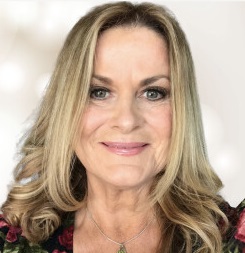
Laura Bojarskaitė
Neuroscientist, bestselling author and keynote speaker
Popular talks
- BRAINWASHING: HOW SLEEP LITERALLY WASHES YOUR BRAIN
- SLEEP TO PERFORM: SLEEP AS A BUSINESS STRATEGY
- AI AND THE BRAIN: THINKING TOGETHER
- LEARNING & MEMORY: HOW TO MAKE KNOWLEDGE STICK
- +2
Talks
Popular talks by Laura Bojarskaitė
-
BRAINWASHING: HOW SLEEP LITERALLY WASHES YOUR BRAIN
Laura brings cutting-edge neuroscience to life through infectious enthusiasm, humour, memorable storytelling, and practical insights. As an active neuroscientist at the University of Oslo, she combines first-hand research experience with a deep understanding of discoveries made by scientists worldwide. Her talks are scientifically rigorous without being academic, entertaining without sacrificing…
Laura brings cutting-edge neuroscience to life through infectious enthusiasm, humour, memorable storytelling, and practical insights. As an active neuroscientist at the University of Oslo, she combines first-hand research experience with a deep understanding of discoveries made by scientists worldwide. Her talks are scientifically rigorous without being academic, entertaining without sacrificing substance, and designed to leave audiences with ideas they can put into practice immediately.
-
SLEEP TO PERFORM: SLEEP AS A BUSINESS STRATEGY
The extraordinary science of the brain’s night-time cleaning system. What if one of the most important things your brain does while you sleep is take out the rubbish? Every day, your brain produces metabolic waste. Yet unlike the rest of your body, it has a highly unusual system for managing…
The extraordinary science of the brain’s night-time cleaning system. What if one of the most important things your brain does while you sleep is take out the rubbish?
Every day, your brain produces metabolic waste. Yet unlike the rest of your body, it has a highly unusual system for managing its internal environment. Only recently have scientists begun uncovering how fluid moves through and around the sleeping brain, potentially helping remove waste products associated with neurodegenerative diseases.
Laura takes audiences inside one of neuroscience’s most fascinating discoveries: the glymphatic system.
-
AI AND THE BRAIN: THINKING TOGETHER
Why better sleep may be your organisation’s most overlooked competitive advantage. What if the biggest obstacle to your team’s performance isn’t a lack of motivation, talent, or effort—but a lack of sleep? We invest in leadership training, productivity tools, and performance optimisation. Yet many organisations systematically underestimate one of the…
Why better sleep may be your organisation’s most overlooked competitive advantage.
What if the biggest obstacle to your team’s performance isn’t a lack of motivation, talent, or effort—but a lack of sleep?
We invest in leadership training, productivity tools, and performance optimisation. Yet many organisations systematically underestimate one of the most important biological foundations of human performance: sleep.
What happens to a brilliant employee after several nights of insufficient sleep? Can a sleep-deprived leader recognise their own declining judgement? Why do small frustrations become major conflicts when we’re tired? And can getting enough sleep improve creativity, learning, decision-making, and resilience?
-
LEARNING & MEMORY: HOW TO MAKE KNOWLEDGE STICK
How artificial intelligence is changing the way we think, learn, remember, and make decisions. What happens to human intelligence when artificial intelligence starts doing some of our thinking for us? AI promises to make us faster, smarter, and more productive. But what happens inside our minds when we increasingly rely…
How artificial intelligence is changing the way we think, learn, remember, and make decisions.
What happens to human intelligence when artificial intelligence starts doing some of our thinking for us?
AI promises to make us faster, smarter, and more productive. But what happens inside our minds when we increasingly rely on machines to generate ideas, answer questions, make decisions, and solve problems?
Could AI make us more creative—or encourage everyone to think alike? Can information generated by AI influence our memories? Why are we so easily persuaded by confident answers, even when they’re wrong? And what happens to our ability to think independently when solutions are always one prompt away?
-
THE ADAPTABLE BRAIN: THE NEUROSCIENCE OF CHANGE
The surprising neuroscience of learning faster, remembering longer, and forgetting less. What if everything you were taught about learning was wrong? Most of us spend years in education learning what to think, but very little time learning how our brains actually acquire and retain knowledge. Why does rereading make us…
The surprising neuroscience of learning faster, remembering longer, and forgetting less.
What if everything you were taught about learning was wrong?
Most of us spend years in education learning what to think, but very little time learning how our brains actually acquire and retain knowledge.
Why does rereading make us feel like we’ve learned something, even when we’ll forget it tomorrow? Why does struggling to remember information often strengthen learning? Why is forgetting not always a failure of memory? And why does sleep play such a crucial role in turning new experiences into lasting knowledge?
Laura reveals the fascinating science of how memories form, change, and sometimes disappear.
Drawing on decades of research in cognitive neuroscience and psychology, she introduces practical techniques such as spaced learning, retrieval practice, interleaving, and desirable difficulties—methods that can make learning significantly more effective.
She also explores one of the most surprising discoveries in neuroscience: memory is not a recording of the past. Every time we remember something, our brains actively reconstruct it.
-
RESILIENCE: TRAINING THE BRAIN TO RECOVER FASTER
Why our brains resist change—and how to become better at navigating it. Your brain is built to adapt. So why does it resist change? Organisations constantly ask employees to embrace transformation, adopt new technologies, abandon established routines, and remain flexible in an uncertain world. But change isn’t simply a matter…
Why our brains resist change—and how to become better at navigating it.
Your brain is built to adapt. So why does it resist change?
Organisations constantly ask employees to embrace transformation, adopt new technologies, abandon established routines, and remain flexible in an uncertain world.
But change isn’t simply a matter of attitude or motivation. It involves biological systems that continuously predict what will happen next, learn from experience, and favour familiar patterns of behaviour.
Why does uncertainty feel so uncomfortable? Why is changing an established habit often more difficult than learning something completely new? Why do even highly intelligent people resist changes they rationally agree with? And can we actually train our brains to become more adaptable?
Laura explores the neuroscience of neuroplasticity, habit formation, cognitive flexibility, and decision-making under uncertainty.
Biography
About Laura Bojarskaitė
Dr Laura Bojarskaitė is a neuroscientist, bestselling author, and international keynote speaker who makes the science of the brain impossible to ignore—and surprisingly easy to understand.
With infectious enthusiasm, boundless energy, and a natural sense of humour, Laura Bojarskaitė has a rare talent for turning complex neuroscience into fascinating stories, memorable insights, and practical tools people can use immediately. Her talks combine cutting-edge research with engaging storytelling, helping audiences rethink how they sleep, work, learn, perform, and navigate change.
Laura Bojarskaitė is a postdoctoral researcher at the University of Oslo, where she investigates what happens inside the brain while we sleep. Her research explores how blood vessels and fluid movement contribute to the brain’s waste-clearance processes, with important implications for understanding Alzheimer’s and other neurodegenerative diseases. Her scientific work has been published in Nature Communications, cited more than 500 times, and supported by over NOK 5 million in research funding. In 2018, she received the David S. Miller Most Promising Young Scientist Award at the Gordon Research Conference on Barriers of the CNS in the United States.
Laura Bojarskaitė holds a PhD in neuroscience from the University of Oslo, an MSc in pharmaceutical sciences from the University of Copenhagen, and a BSc in biochemistry from Vilnius University. She has taught at the University of Oslo’s Faculty of Medicine since 2018, further refining her ability to make even the most complicated scientific concepts clear, accessible, and engaging.
Over the past five years, Laura Bojarskaitė has delivered talks for more than 100 organisations, including Nord Security, Oxylabs, Surfshark, NordVPN, Nasdaq, IKEA, Vinted, Swedbank, SEB, Accenture, EY, and Thermo Fisher Scientific. She has also spoken at major conferences such as LOGIN, the Nordic Sleep Conference, and the Lithuanian Business Forum.
Her keynotes explore the neuroscience behind some of today’s biggest personal and organisational challenges: sleep and performance, artificial intelligence and the brain, learning and memory, resilience, stress, and adapting to change. Rather than offering generic advice or recycled productivity tips, Laura Bojarskaitė brings audiences directly to the scientific evidence—revealing what we know, what we are still discovering, and how these insights can transform everyday behaviour.
Beyond the stage and laboratory, Laura Bojarskaitė is a passionate science communicator. Her book 300 Questions and Answers About Sleep (VMG, 2025), based on 460 scientific publications, reached No. 1 on Lithuania’s Vaga bestseller list, with an English-language edition in development.
She is also the creator and host of two popular science radio programmes on LRT, Lithuania’s national broadcaster: Sleep DNA (83 episodes, 2023–2025) and Brain DNA, which currently airs weekly. In Norway, Laura Bojarskaitė regularly contributes to leading national media outlets, including NRK, TV 2, VG, and Dagbladet. Internationally, her expertise has been featured in New Scientist, Newsweek, Healthline, Verywell Health, Medical News Today, and the Daily Mail.
What truly distinguishes Laura Bojarskaitė is her ability to combine serious scientific expertise with genuine warmth, humour, and extraordinary enthusiasm. Audiences describe her as rigorous without ever being dry, energetic without sacrificing substance, and exceptionally gifted at making difficult ideas feel simple.
How to book Laura Bojarskaitė
Answers on fees, availability and booking process.
How do I book Laura Bojarskaitė for a keynote speech?
You can book Laura Bojarskaitė through London Speaker Bureau by submitting the enquiry form on this page or calling our team. One of our consultants will respond promptly with Laura's current availability, speaking fees and any specific requirements for your event.
What are Laura Bojarskaitė's speaking fees?
Laura Bojarskaitė's speaking fees depend on the event format (in-person or virtual), the location, the length of the engagement and the level of customisation required. Please contact London Speaker Bureau for an up-to-date fee quote for Laura tailored to your event.
What topics does Laura Bojarskaitė speak about?
Laura Bojarskaitė speaks on Digital Trends, Education, Neuroscience, Performance, Strategy. Talks can be shaped around your audience, industry and strategic objectives - share your event brief with London Speaker Bureau and we will work with Laura to align the content with your delegates and goals.
Is Laura Bojarskaitė available for international events?
London Speaker Bureau can book Laura Bojarskaitė for events worldwide, subject to Laura's schedule. Please send us your event date, location and format and we will confirm availability and handle travel and logistics on your behalf.
Does Laura Bojarskaitė deliver virtual or online keynotes?
Virtual and hybrid keynotes are now a standard part of the speaking industry. Please contact London Speaker Bureau to confirm whether Laura Bojarskaitė is available to deliver a virtual session for your event and on which platform (Zoom, Microsoft Teams, a bespoke studio or your own).
How long is a typical keynote by Laura Bojarskaitė?
Most keynote speeches run between 45 and 60 minutes, often followed by a 15-30 minute Q&A. Other formats - shorter conference slots, panel appearances or longer workshop sessions - may also be possible. Share your agenda with London Speaker Bureau and we will confirm what Laura can accommodate.
Can Laura Bojarskaitė tailor the keynote to our industry and audience?
London Speaker Bureau will brief Laura Bojarskaitė on your audience profile, sector and objectives so the keynote can be shaped around your event. The level of customisation possible depends on the speaker and the lead time - contact us with your brief and we will confirm what Laura can offer.
What languages does Laura Bojarskaitė present in?
Laura Bojarskaitė delivers keynotes in English. This profile may not list every language available; ask London Speaker Bureau to confirm. If you require simultaneous interpretation or a multilingual format, please mention this in your enquiry and London Speaker Bureau will arrange it for you.
What makes Laura Bojarskaitė a strong fit as a keynote speaker?
Laura Bojarskaitė's areas of expertise include Digital Trends, Education, Neuroscience, Performance, Strategy. To get a clear sense of Laura's style, credentials and how they engage an audience, please review the biography, popular talks and any videos or testimonials shown on this page, or request a detailed speaker brief from London Speaker Bureau.
What kind of events can Laura Bojarskaitė speak at?
Laura Bojarskaitė can be booked through London Speaker Bureau for corporate conferences, leadership events, internal team meetings, association gatherings and private client engagements where expertise in Digital Trends, Education, Neuroscience, Performance, Strategy is relevant. Details of Laura's background and previous engagements are included in the biography above; contact us if you would like a more detailed list of past clients or case studies.
Does Laura Bojarskaitė offer workshops, panels or fireside chats in addition to keynotes?
Beyond keynote speeches, many of the speakers on our roster also take part in workshops, executive masterclasses, panel discussions and fireside chats. Contact London Speaker Bureau with your preferred format and we will confirm what Laura Bojarskaitė is able to offer alongside or instead of a keynote.
How far in advance should we book Laura Bojarskaitė?
We generally recommend enquiring at least three to twelve months in advance to secure your preferred date with Laura Bojarskaitė, particularly during peak conference seasons. Where possible we also accommodate shorter lead times - please contact London Speaker Bureau to check Laura's current availability for your dates.
Similar Profiles
Speakers you may also like alongside Laura Bojarskaitė
-
Nicole Vignola Neuroscientist, Organisational Consultant, Author -
Sabina Brennan Neuroscientist, Chartered health psychologist, Four-time Irish Times bestselling author, Thought leader, Corporate keynote speaker -
Laura Ellis Head of Technology Forecasting, BBC, Keynote Speaker on Effectively Harnessing AI, Managing Technological Change and Leadership -
Matt Thomas Creative brand strategist, writer and speaker who makes experts, brands and ideas impossible to ignore -
Michael Platt Neuroscientist whose work focuses on the brain’s decision-making processes